EV prices have come a long way since the first all-electric models hit the streets in the late 2000s. The original 2006 Tesla Roadster might have wowed drivers with its 250-hp motor and 250-mile range, but it also set a pricey precedent for the segment, with an MSRP that eclipsed $100,000.
The Nissan LEAF provided a bit of respite when it debuted in 2010, retailing for just $32,000, with a $7,500 federal tax credit bringing the price down to $25,000. The LEAF represented a rather different approach to the EV formula, with 110 hp and 100 miles of range, but it served as an important proof of concept that paved the way for other mass-produced all-electric models.
EVs are now more affordable than ever, though it might not appear that way on paper. The average price of a new EV has risen from around $43,000 to $54,000 in 2026, but all-electric vehicles are still about $5,000 cheaper than they were a decade ago, adjusted for inflation. Drivers can also expect a lot more for their money when they buy a new model. In 2015, the typical $35,000 entry-level EV was a compact model with 100 miles of range and a lengthy 16-hour charging time. Today, that same investment can land you a crossover SUV with DC fast-charging capability, more than 300 miles of all-electric range, and the sort of towing capacity that would put some gas-powered trucks to shame.
Larger pickup and SUV models have also contributed to the high average price, but there are still plenty of bargains in the EV segment. Let’s review some of the industry’s most affordable EV models and learn why 2026 is the perfect time to join the growing EV pack.
Best All-Around Commuter: Nissan LEAF
Starting Price: $29,990
We’ll start with the industry’s original budget-friendly EV, the Nissan LEAF. Originally debuting as a small hatchback, the LEAF evolves into a subcompact crossover with the debut of the new third-generation model in 2026. The LEAF aims to be for the EV segment what the Honda Civic and Toyota Corolla have long been for the gas-burning class: a reliable, entry-level option that’s priced to move. The crossover certainly isn’t the most powerful option on the market at 214 hp, though its instant 261 lb-ft of torque gets it from zero to 60 mph in 6.9 seconds.
However, it’s range, rather than pure performance, that moves the needle on this end of the EV spectrum. The new third-generation LEAF now offers a maximum driving range of 303 miles, a massive improvement over the entry-level 2025 model’s 149 miles. Charging time has also improved, especially with a DC fast charger, allowing motorists to top off the lithium-ion “tank” in as little as 35 minutes. The new model comes standard with a NACS charging port, allowing drivers to use Tesla’s nationwide network of DC fast-charging stations. This should go a long way towards making the LEAF a more practical option for those who don’t want to plan their week around a charging schedule.
It’s a strong showing on performance and efficiency, but the LEAF also packs some fun surprises, with an impressive interior and cutting-edge tech that defy the EV’s low starting price. From a standard set of 12.3-inch dashboard displays to available 14.5-inch upgrades, wireless Apple CarPlay and Android Auto, a wireless charging pad, and an impressive suite of advanced safety features, the LEAF packs the sort of value that’s tough to find in a modern EV.
Best Option for City Driving: Chevy Bolt
Starting Price: $27,600
Like the Nissan LEAF, Chevy’s Bolt is something of a battery-electric bellwether that shows where the segment is headed. The EV also debuted as a small car before transitioning to a subcompact crossover in 2026. The Bolt is technically classified as a 2027 model, but the new, second-generation Bolt has already arrived in dealerships, offering drivers a wallet-friendly option.
That’s not to say that the Bolt is simply Chevy’s take on the LEAF. The subcompact model is designed for a slightly different purpose, with a smaller footprint that makes it ideal for dense city driving. This is sure to prove handy when trying to squeeze the SUV into a tiny sparking spot or weave through traffic.
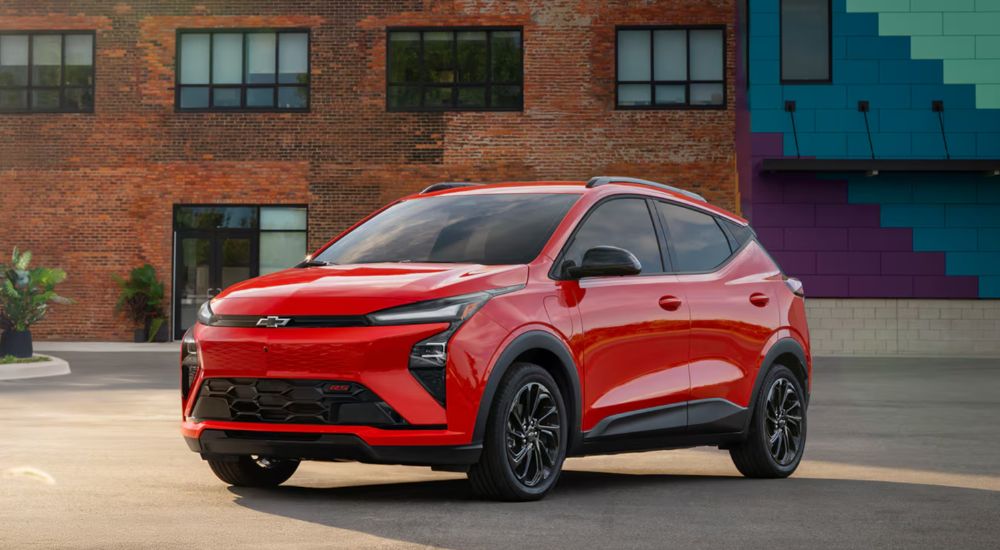
Despite its dimensions, the Bolt actually offers more maximum cargo capacity than its Nissan rival. The LEAF has the Bolt beat when the second row is occupied, but when the seats are folded down, the Chevy gains a slight edge with 56.3 cu.ft. of storage to the Nissan’s 55.5 cu.ft. The Bolt is also the more comfortable option if you plan to regularly bring backseat passengers along for the ride, with the crossover offering 39.1 inches of second-row legroom compared to 31.9 inches in the LEAF.
If there’s one area where the Bolt could use improvement, it would be the driving range. At 262 miles, the Bolt trails well behind the current industry average of 325 miles. That might limit the SUV’s potential for those seeking a long-haul option, but it’s less of a factor if you’re looking for an affordable urban driver. When it does come time for a charge, the new crossover-based Bolt is quicker than ever, with a NACS port that allows the EV to charge from 10 to 80 percent in as little as 26 minutes.
Best Option for Families: Chevy Equinox EV
Starting Price: $34,995
The EV segment can often require some adjustment for those accustomed to piloting internal-combustion models. The Chevy Equinox EV is designed to bridge that gap, offering a more traditional driving experience while still allowing buyers to take advantage of all the cost-saving benefits of the all-electric format.
The Equinox EV has been nothing short of an EV sensation since its 2024 introduction and has already earned plenty of praise from drivers and critics alike. The Equinox EV was second only to the Tesla Model Y in compact EV sales in 2025, and was dubbed “Breakthrough EV of the Year” by InsideEVs in 2024. The EV also won MotorWeek’s Best of the Year in its 2025 Drivers’ Choice Awards, and was named U.S. News & World Report‘s 2026 Best Compact EV SUV for the Money. That’s some heavy hardware, but the Equinox EV is well-equipped to haul its awards, with up to 300 hp and 1,500 lbs of towing capacity.
That said, it’s the Chevy’s range that really marks its most notable selling point. Even the base model can go 319 miles on a single charge. While the dual-motor version sees that figure drop to 307 miles, it introduces AWD and 355 lb-ft of torque. of torque into the mix. This range makes the Equinox uniquely suited to longer road trips and busy weeks, which should be a selling point for any family that’s looking for an all-electric alternative to their current SUV.
In addition to its power and range, the Equinox is also equipped with some of the best tech in the compact EV segment. The SUV’s 17.7-inch touchscreen infotainment display is easily the largest in its class and comes standard on every 2026 trim. Add an 11.0-inch digital gauge display, built-in GPS navigation, a Wi-Fi hotspot, and a comprehensive package of advanced driver-assistance systems, and it’s not hard to see how the Equinox EV is setting a new standard in the segment. Select one of the upper trims, and you’ll even be able to enjoy Chevy’s Super Cruise hands-free driving system.
Best Tech for the Price: Hyundai IONIQ 5
Starting Price: $35,000
If you’re looking for an affordable EV that doesn’t feel like a budget model, the Hyundai IONIQ 5 is here to serve. The compact crossover delivers a premium experience without the associated MSRP, and is easily the most tech-forward option on our list. This is even true of the base model, which allows every driver to enjoy a generous array of standard comfort, convenience, and safety tech, including dual-zone automatic climate control, keyless entry and push-button start, a digital instrument panel, a navigation system, a 12.3-inch touchscreen, wireless Apple CarPlay and Android Auto smartphone integration, adaptive cruise control, intersection collision mitigation, and front and rear parking sensors. Higher trims add even more advanced tech, including an eight-speaker Bose premium stereo and a 360-degree camera system, as well as ventilated front seats, a digital rearview mirror, ambient interior lighting, a head-up display, and Hyundai’s Highway Driving Assist 2 technology.
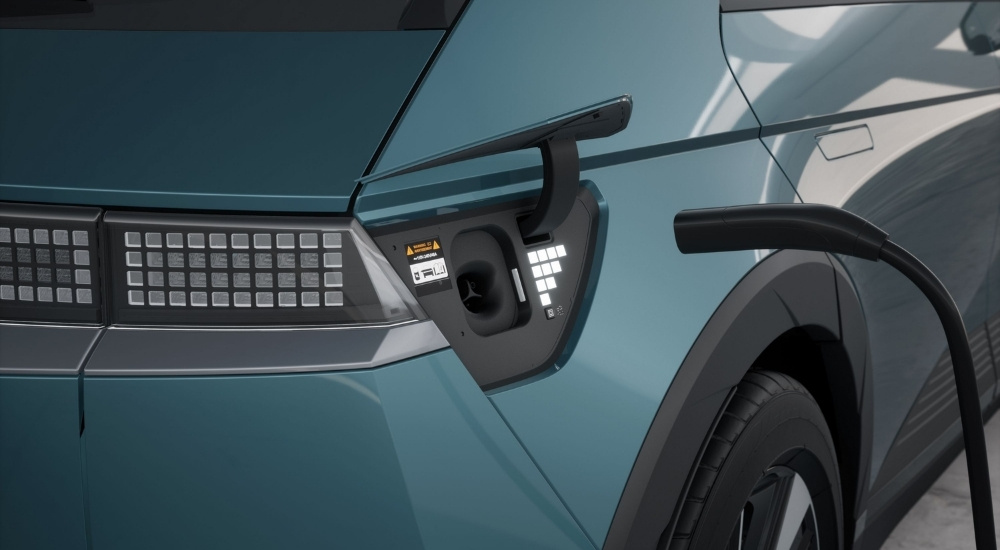
In addition to its cutting-edge interior, the IONIQ 5 boasts a performance resume that few models can match at this price. The standard 168-hp setup is fine for most applications, though it’s a bit limited, with a range of 245 miles. The dual-motor design almost doubles the output to 320 hp and increases range to 290 miles, but the 84-kWh battery and single-motor option present the sweet spot in the 2026 lineup. Drivers will enjoy a satisfying combination of performance and range, with the powertrain delivering 225 hp and 318 miles of all-electric range. Best of all, you won’t find yourself waiting around for a full charge, as the 84-kWh pack takes just 20 minutes to charge from 10 to 80 percent.
Hyundai also offers a compelling option for thrill-seekers in the form of the IONIQ 5 N. While the performance-focused take on the compact SUV is significantly pricier at around $66,200, it’s sure to get your blood pumping with 641 hp, a dedicated boost mode, and the ability to rocket from zero to 60 mph in three seconds flat.
Stretch Your Dollar Further With an EV
These four models prove that you don’t have to break the bank to enjoy the latest in EV tech. While they might not offer the same lightning-quick acceleration as some of the segment’s more performance-focused models, these affordable EVs deliver the sort of value that’s long been tough to find in the all-electric class.
The recent expiration of the $7,500 federal EV tax credit has made these electric models a more expensive proposition, but there are still plenty of state and local incentives available. From direct purchase rebates and state tax credits to reduced registration fees, low-income assistance programs, and more, buyers should always do a little research to ensure they don’t leave any money on the table. Whether you need a small, efficient option that’s designed to accommodate your urban lifestyle, a versatile option for your daily commute, a family-focused ride that features the best in modern safety tech, or just want a premium EV experience at a reasonable price, there’s never been a better time to consider an all-electric vehicle.