While Toyota hasn’t been as boisterous about EVs as other automakers, the brand is steadily working towards making them a prominent fixture of its lineup. In 2025, it sold nearly 200,000 EVs worldwide, marking a 42% increase year-over-year. Including hybrids, Toyota has more electrified models than any other major brand.
Toyota is going full speed ahead in 2026 by revamping and expanding its EV lineup for American buyers. This includes reinventing a former gas-powered model for the electric world, giving an existing EV a massive overhaul, and adding an all-new model built for an eco-conscious love of the outdoors. With more Toyota EV choices than ever, it’s a good time to see what’s available at the nearest dealership.
Are you a Toyota loyalist looking to join the EV world? Have you been considering switching from another brand? Whatever the reason you’re looking at Toyota EVs, here’s the lowdown on the all-new lineup and what each EV has to offer.
The Toyota C-HR Returns as an Electric SUV
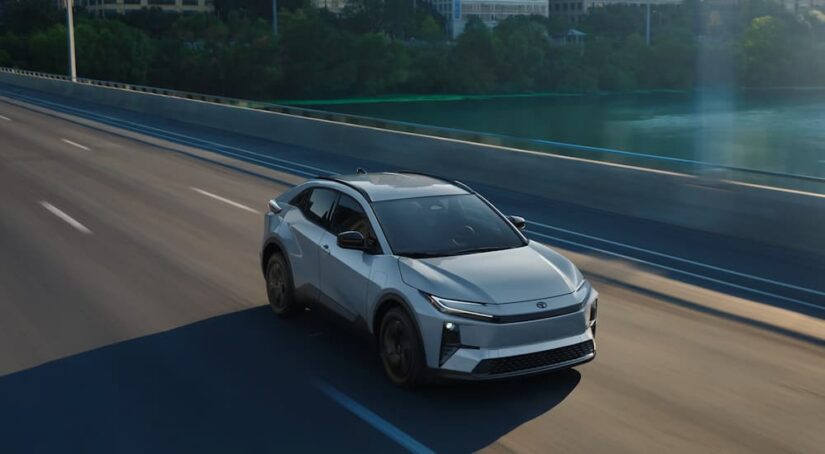
Toyota diehards may remember the Toyota C-HR, a gas-powered subcompact crossover first released for the 2018 model year. Its stay here was short-lived, as the United States (and most of Asia) did not receive the second-generation model that was introduced in 2023; that vehicle was limited to Europe, Oceania, and parts of the Middle East, with the Toyota Corolla Cross replacing it in other markets. However, an all-electric version of the C-HR arrived internationally for 2025—and this year, the new C-HR comes to America.
What can people expect from the 2026 Toyota C-HR? A great-handling, great-looking SUV with an exciting edge (Fun fact: the original C-HR was planned for the youthful Scion brand before Toyota discontinued that marque). For 2026, this small SUV is equipped with a standard dual-motor AWD powertrain that generates 338 hp and can go from zero to 60 mph in under five seconds. Its factory-estimated range stands at 287 miles, which is among the best in the class, and it uses a Tesla-style NACS charging port for easy recharging.
The C-HR also has top-of-the-line technology, including a 14-inch infotainment touchscreen, two wireless charging pads, wireless Apple CarPlay and Android Auto, and a digital key that can replace your traditional key fob. Buyers also get the full gamut of Toyota Safety Sense 3.0 driver assistance, from modern basics like automatic emergency braking and dynamic radar cruise control to traffic sign recognition, parking sensors, and a panoramic view monitor.
For its American debut, the C-HR is available in two trim levels. The C-HR SE is anything but basic, with heated power-adjustable front seats, a heated steering wheel, a power tailgate, dual-zone automatic climate control, and deep-tinted privacy glass. Meanwhile, the C-HR XSE rides on larger 20-inch wheels for better handling and adds advanced features such as a 360-degree camera, driver’s seat memory, SofTex upholstery, and traffic jam assistance.
The Toyota bZ Receives a New Name and Newfound Power
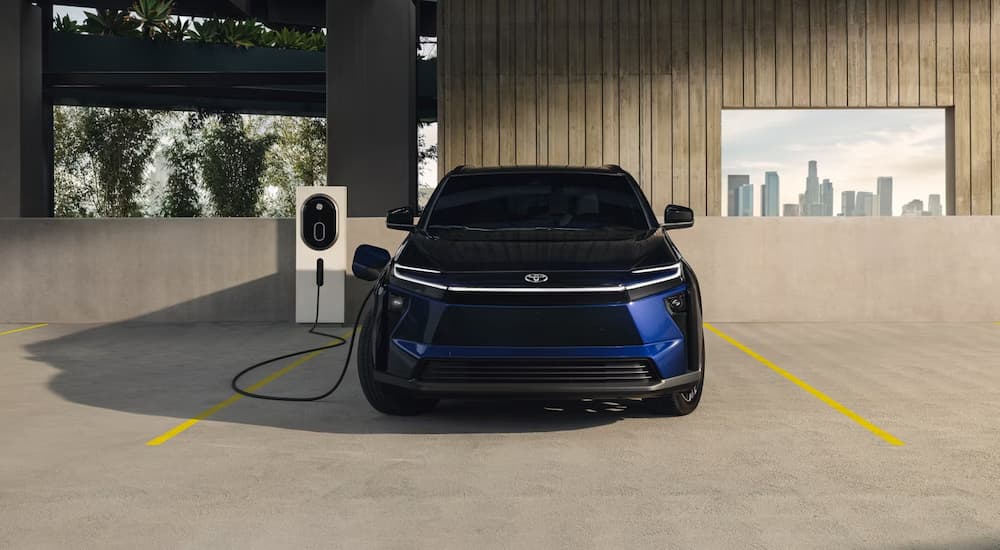
Prior to this year, Toyota’s lone all-electric entry between the Atlantic and Pacific Oceans was the Toyota bZ4X, a compact crossover produced since 2023. With sales stagnating, though, Toyota recognized the need to do something different with its “Beyond Zero” flagship model. The result is a 2026 model that does more than just simplify the unwieldy name—it’s like an entirely different vehicle.
For starters, Toyota has revitalized the powertrain and greatly increased the range. Whereas the previous bZ4X peaked at 214 hp with optional AWD, the new Toyota bZ produces 221 hp in its standard FWD configuration, and it matches the C-HR’s 338 hp in an AWD setup. Furthermore, the EPA-estimated range is now 314 miles in FWD and 288 miles in AWD; the old bZ4X could only muster 252 miles and 228 miles, respectively. The old CCS charging port was replaced with an NACS port, but CCS and J1772 adapters are included, giving owners access to almost every public charging station.
To complete the performance trifecta, Toyota redesigned the driving dynamics so the bZ feels tighter, more responsive, and smoother on all types of roads. All-new exterior elements, including the hooked headlights, sharper front fascia, and available color-matched fenders, give the bZ a more youthful style. The refreshed infotainment and safety systems are similar to those in the C-HR, and the steering wheel features special paddles to control how much energy the battery regenerates from braking.
Also like the C-HR, the updated bZ is available in two trims—the XLE and Limited—with the latter offering high-end amenities such as ventilated front seats, an eight-way power passenger seat, heated rear seats, and a digital rearview mirror. Even with all the upgrades, the 2026 Toyota bZ’s starting price is lower than its predecessor, making it an affordable way to get into EVs while still offering everything you need.
The Toyota bZ Woodland Takes EVs Off-Road
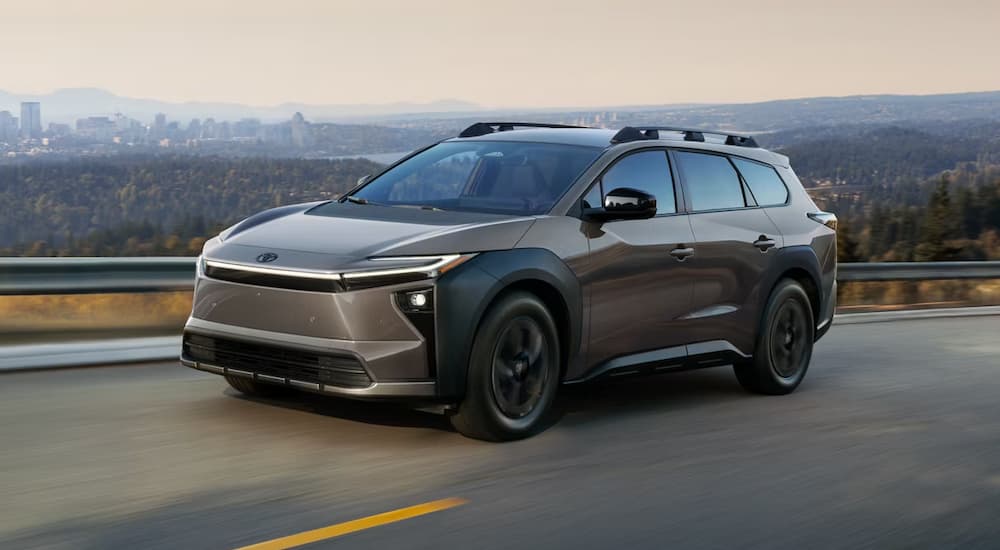
It may share its name with the bZ, but make no mistake: the new Toyota bZ Woodland is a distinct vehicle aimed at the adventure audience. Known in Japan and Europe as the Toyota bZ4X Touring, this midsize SUV is made for hitting the nearest trails. Its “Woodland” moniker was previously used on off-road-oriented versions of the Toyota RAV4 and Sienna, and now it comes to the all-electric world with its first standalone model.
Although based on the same platform, the bZ Woodland is almost six inches longer than the regular bZ. This increases second-row legroom and cargo space, with the latter approaching 75 cubic feet, so everything you need for an outing will fit comfortably. Beyond this size boost, the enhanced performance, off-road equipment, and technology further emphasize its status as a unique EV:
- The dual-motor AWD powertrain has a larger rear motor that increases output to 375 hp. The bZ Woodland accelerates from zero to 60 mph in 4.4 seconds with a range of 260 miles.
- A 3,500-pound towing capacity means you can haul all your powersports, boating, and camping goodies. There are also standard roof rails that further boost cargo capacity.
- X-MODE and Grip-Control manage wheel slip, and available all-terrain tires increase traction even on bumpy and muddy paths.
- Increased ground clearance gives you more leeway when encountering boulders, stumps, and other obstacles.
- A standard Panoramic View Monitor 360-degree camera system lets you see around the vehicle in tight situations.
- Overfender extensions are standard to protect the body from flying rocks, branches, and mud buildup.
- The panoramic glass moonroof on the bZ Woodland Premium lets the stars shine during your nighttime adventures.
- Four USB-C ports throughout the cabin keep devices charged up throughout your journey.
Find a New Toyota EV
After dipping its toe in the EV waters stateside and having great success with its hybrid and plug-in hybrid vehicles, 2026 is the year when Toyota is stepping up its commitment to an all-electric lineup. By tripling its EV lineup, Toyota now solidly fills three major vehicle segments with its new subcompact, compact, and midsize electric SUVs—and it has already announced an electric three-row SUV with the redesigned 2027 Toyota Highlander.
The automaker also offers many options within that trifecta, including everyday commuter models, spirited vehicles to jolt your adrenaline, and adventure-tuned SUVs for weekend getaways. Multiple trim levels and add-on packages allow further personalization—all with the affordable pricing and reliability Toyota is known for. If you’ve been waiting for the right opportunity to get an all-electric SUV, this lineup is a prime opportunity to make the leap.