
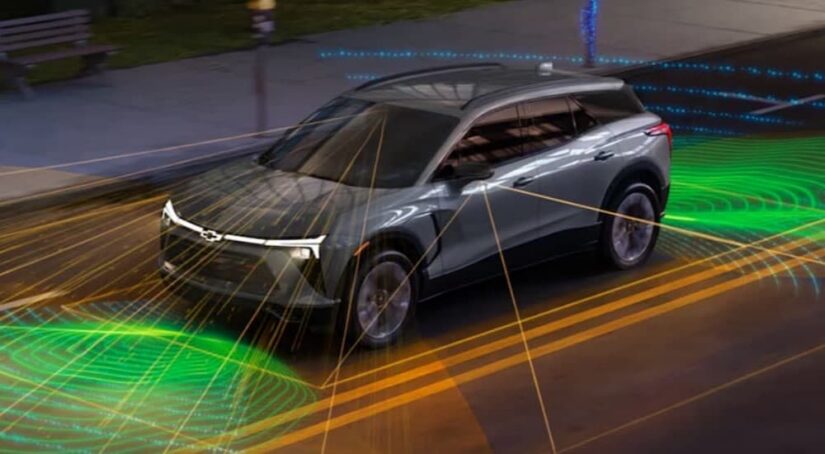
From hybrid and EV powertrains to self-driving technology, cutting-edge infotainment tech, and the dawn of the modern crossover SUV, the auto industry has seen numerous notable advancements over the last few decades. These innovations have gone a long way towards creating a more efficient, convenient, and enjoyable driving experience. However, advanced safety features and advanced driver assistance systems (ADAS) have really moved the needle in today’s market.
Modern safety technology allows drivers to hit the road with a new sense of confidence, but it still runs the gamut in terms of impact. While some of these features represent a genuine leap forward in vehicle safety, others seem largely designed to give a vehicle a more premium feel. This raises an important question for those who are in the market for a new car, truck, or SUV. Which safety features actually matter when buying a new car? Let’s dive into the wide world of automotive safety tech and learn which features are worth seeking out as we work to create a safer road for all.
What’s Special, and What’s Legally Required?
Before we explore essential safety tech, we should probably take a moment to address one important distinction. While some advanced safety features give a model a distinct edge in a competitive market, many are actually required by U.S. law. This can lead to some confusion among buyers and muddy the waters when it comes time to compare different models. You might be drawn to a particular vehicle for a specific safety feature, only to learn that it’s available on every model of a certain age.
Some of these features are relatively obvious, including seat belts, air bags, anti-lock brakes, laminated windshields, LATCH (Lower Anchors and Tethers for Children) systems, and headrests. Other standard safety systems might catch consumers a little off guard. Take the backup camera, for instance. While it was once considered a cutting-edge feature, the rearview camera has been required on all new vehicles since early 2018.
The same goes for Tire Pressure Monitoring Systems (TPMS) and Electronic Stability Control Systems (ESC), which are both federally mandated as of 2008 and 2012, respectively. That said, things do get a bit complicated when you wade into the issue of functionality. While every modern vehicle is required to feature some form of TPMS, these systems really run the gamut. A legally compliant TPMS can be as simple as a dashboard warning light, or as complex as a full-color screen that displays each tire’s current pressure.
The same goes for the ESC that keeps your vehicle firmly planted in its lane. ESC is built around a system of sensors that monitor steering input, wheel speed, lateral movements, and other metrics, and selectively apply the brakes and reduce engine power to improve control when it detects a loss of stability. As you start to explore AWD models, premium trims, and off-road vehicles, you’ll find that ESC technology, in combination with electronic limited-slip differentials, traction control, and torque vectoring systems, powers customizable drive modes. From specific settings for sand and mud to modes designed with snow, ice, and even race tracks in mind, these drive mode systems represent a premium take on the legally-required ESC, and can make all the difference if you’re the type of driver who regularly encounters challenging terrain.
Essential Safety Features
Beyond the systems required by law on every new car, there are several you should consider when buying your next car. It may only be a matter of time before at least some of these are mandatory as well.
Automatic Emergency Braking (AEB)
Automatic Emergency Braking is easily one of the most vital safety features in any modern vehicle. While the human body is a marvel, it’s no match for the reaction time of a computer-based system. It can take anywhere from 200 to 250 milliseconds for a driver to react to a visual stimulus, or up to 400 milliseconds when stressed. However, a complex array of sensors and cameras allows modern AEB to jump into action within as little as 100 milliseconds. That’s literally quicker than the blink of an eye, and it can make all the difference in avoiding a serious accident. This approach works well, with AEB systems preventing 100% of forward-collision incidents at speeds below 35 mph, according to a AAA study.
Blind Spot Monitoring (BSM)
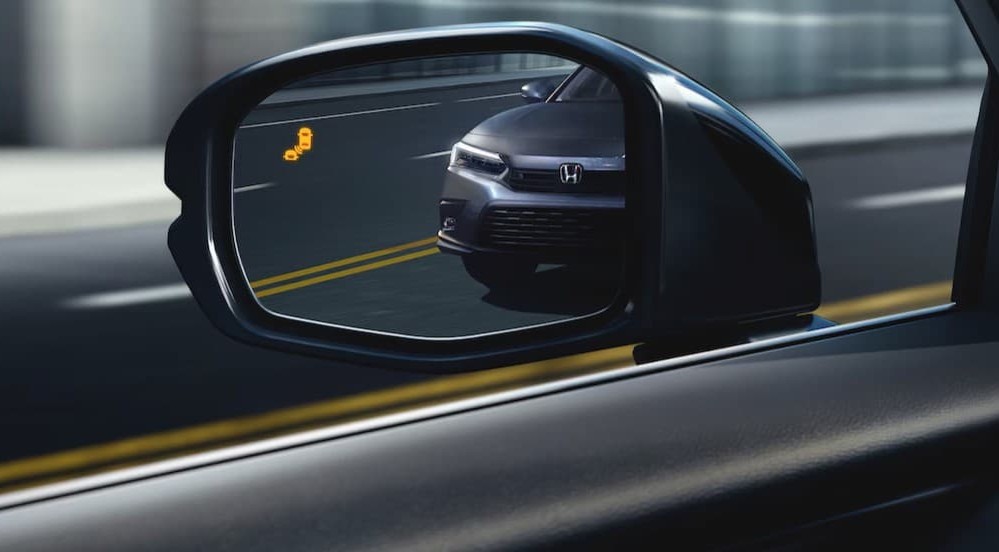
Visibility is key to avoiding accidents, but some areas are easier to see than others. In fact, there’s one area that’s so notorious for providing motorists with unwelcome surprises that it’s become known as the “blind spot.” This dangerous zone falls just outside a driver’s field of vision and is responsible for more than 800,000 accidents each year.
Luckily, most automakers have engineered around this issue with blind spot monitoring (BSM) systems. These range from the relatively basic, such as an icon on the gauge cluster or a bright orange light mounted on the rearview mirror, to advanced Blind-Spot View Monitors (BVM) that can provide a live feed of that hard-to-see area right on your instrument panel. While a BSM system might serve as a good safety net, it’s no substitute for the old-school approach. Even if your vehicle is equipped with the latest BSM or BVM system, you should still perform the standard over-the-shoulder check every time you change lanes.
Rear Cross-Traffic Alert
While a BSM system might help prevent accidents on the highway, a surprising number of collisions occur at much lower speeds. According to the Insurance Institute for Highway Safety (IIHS), about 20% of all reported vehicle crashes occur in parking lots. That’s where rear cross-traffic alert systems come in.
Functioning like a sort of blind-spot monitor for the rear bumper, these cross-traffic alert systems use a series of sensors to detect oncoming traffic, cyclists, pedestrians, and more. The rear cross-traffic alert system marks a notable improvement over the standard backup camera, as it can detect approaching vehicles that might fall just outside the standard point of view. Audio and visual cues alert drivers to potential hazards with many systems even leveraging an automatic braking feature.
Lane Departure Warning/Lane Keeping Assist (LDW/LKA)
Today’s adaptive cruise control (ACC) systems offer drivers a new level of convenience while reducing fatigue on longer rides. However, this automation can also pose problems. It’s easy to become inattentive and drift across the road when you’re already outsourcing all of the acceleration and braking duties to an ACC system.
Lane departure warning systems are here to help. A lane departure warning (LDW) system employs forward-facing cameras to keep a close eye on the lane markings, ensuring your vehicle is firmly planted between the lines and issuing an alert when you begin to stray from the straight and narrow. A Lane Keeping Assist (LKA) system goes one step further, automatically correcting the car’s course with small steering adjustments that provide a safe, predictable ride. Combine LDW and LKA technology with adaptive cruise control, and you basically have a hands-free driving system. While full hands-free systems like GM’s Super Cruise and Ford’s BlueCruise also include driver monitoring tech and pre-mapped highway data and can even perform automatic lane changes, a basic adaptive cruise control with LDK/LKA fulfills the same role for safety.
Good Headlights
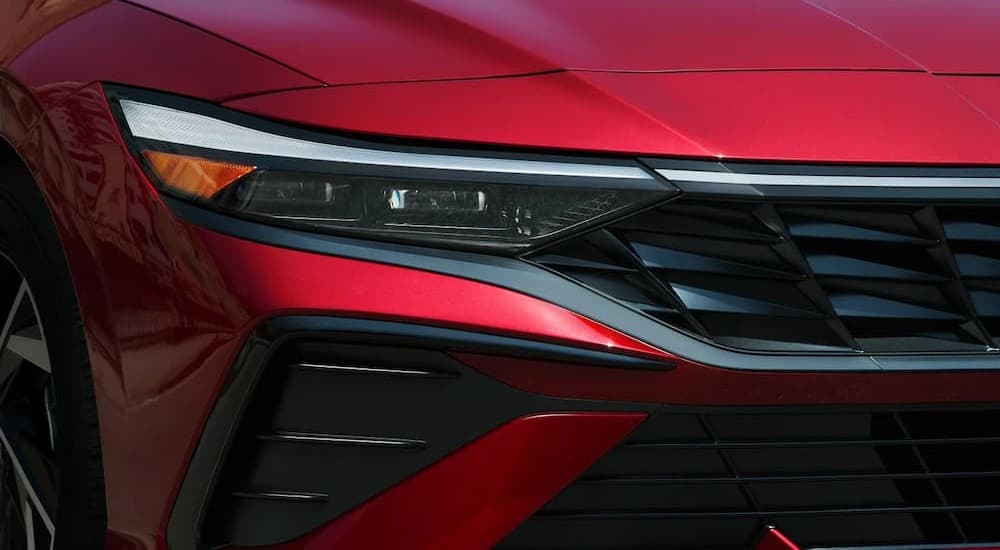
Finally, there’s no underestimating the importance of a good set of headlights when you’re trying to improve road safety. While they might not garner as much attention as cutting-edge ADAS and hands-free driving tech, headlights play a critical role in improving nighttime safety.
Every automaker makes lofty claims about its own lights, but the Insurance Institute for Highway Safety (IIHS) provides an objective comparison that makes it easy to narrow down your options. The organization rates all headlights on a scale of Poor to Good, and provides detailed data on range and illumination. The top finishers tend to share a few qualities, including good visibility around curves, longer sight distances, and reduced glare for passing drivers. Advanced headlight systems include unique features that improve both convenience and safety, with examples including:
- Steering-Responsive Headlights: These lights subtly swivel in tandem with the steering wheel, illuminating corners in a way that traditional headlights simply can’t match.
- Automatic High Beams: Can seamlessly swap between high- and low-beam lights in response to oncoming traffic.
- Adaptive Driving Beam: While automatic high beams can switch between high and low settings, Adaptive Driving Beam lights can activate specific lighting patterns in response to real-time traffic. The system can essentially create a shadow around an approaching vehicle, illuminating the road around it without blinding the other driver.
Premium Features and Independent Testing
We’ve covered some of the most essential safety tech to consider when comparing different models, but automakers are adding new features at a record pace. We’ve seen countless safety features enter the market over the last decade, from systems as simple as front and rear parking sensors to head-up displays, digital rearview mirrors, and full hands-free driving systems. Other notable additions include traffic sign recognition technology that, in conjunction with adaptive cruise control, can automatically react to changing speed limits and other signage, and driver attention monitoring systems designed to detect drowsiness and distraction.
A full 360-degree camera system with a bird’s-eye POV is an increasingly common feature and is sure to come in handy when it’s time to pull out of a tight parking spot or make a tricky trailer hitch connection. Forward-facing trail cameras can be useful for avoiding off-road obstacles, and automated parking systems simplify the driving experience, allowing drivers to pilot larger trucks and SUVs into narrow spaces.
There’s an important caveat to keep in mind when comparing vehicles based on safety. While a generous array of modern ADAS and safety tech might go a long way towards improving confidence and convenience when you’re behind the wheel, these features don’t necessarily reflect a model’s true safety credentials. A vehicle’s safety rating is one of the easiest ways to distinguish between different models.
The government-backed National Highway Traffic Safety Administration (NHTSA) and the privately funded IIHS are the two leading names in automotive safety. These organizations put each model through its paces to provide drivers with a clear view of a vehicle’s safety credentials. These assessments are based on crash-test performance rather than ADAS features. An NHTSA five-star safety rating is a solid seal of approval for any model, and the IIHS Top Safety Pick+ designation is worth its weight in gold for those who put a premium on passenger safety.
A little research can go a long way toward ensuring a safe, confident driving experience. Take the time to review all relevant crash-test data, compare standard safety packages and optional add-ons, and remember that all the advanced safety technology in the world is no substitute for an attentive driver. While features like hands-free systems, lane-keeping tech and blind-spot monitoring are certainly helpful, these safety features should complement good driving habits, not replace them.