If you’re looking for a good reason to check out the latest Honda Pilot for sale, we’ll give you four. The Pilot provides plenty of power thanks to a 3.5-liter V6 that produces up to 285 hp and 262 lb-ft of torque, and it can still achieve up to 27 MPG on the highway, matching most of its midsize rivals, while boasting a maximum towing capacity of 5,000 lbs. It’s a compelling package by any measure, and it’s only improving with age.
This three-row SUV receives a comprehensive mid-cycle refresh for 2026, and the result might just be the best model to date. Updated styling is par for the course when it comes to these periodic facelifts, and while the Pilot adopts a boxier aesthetic that has become increasingly popular on the larger end of the SUV segment, Honda is just getting started.
The 2026 model also gains some innovative safety tech and larger displays, along with a new steering system that makes Honda’s largest SUV even easier to helm. Read on as we explore the highlights of the 2026 Pilot and learn how Honda’s three-row SUV can help you enjoy a safer and more stylish driving experience.
#1 – Style in Spades
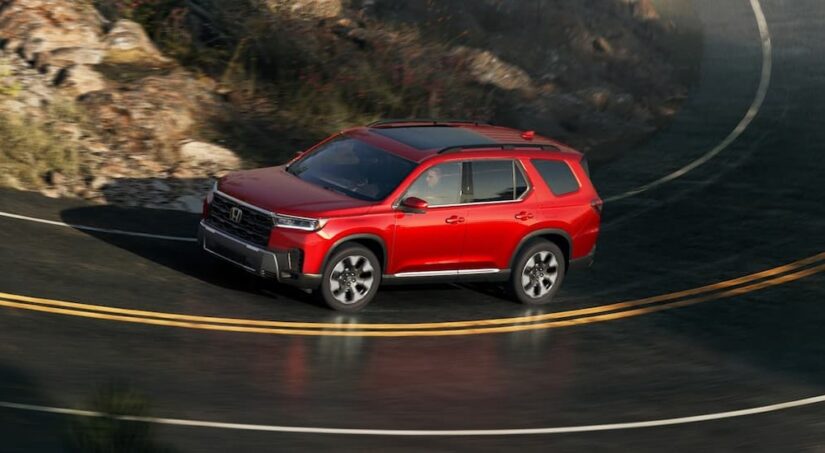
The Pilot has been steadily adopting a more geometric look since the introduction of the current 4th-generation model, but 2026 marks one of the SUV’s most intriguing aesthetic evolutions. It now has new wheel designs and standard roof rails, but it’s the front end that receives the brunt of Honda’s attention, with the automaker dramatically overhauling the Pilot’s fascia.
The grille undergoes a slight growth spurt with a broader design that’s complemented by a gloss-black surround. Just below it, you’ll find a redesigned front bumper that’s noticeably boxier than the 2025 version, further distinguishing itself from the previous model with a two-tone design that lends the Pilot a decidedly sporty appearance.
The 2026 model doesn’t just look the part; it also features more pronounced scuff plates that enable the Pilot to venture into off-road terrain without incurring lasting damage. The brand has also revisited the SUV’s headlights, opting for a slimmer design that seamlessly flows into the fenders, and adding more vertically oriented ducts and vents reminiscent of the brand’s midsize pickup, the Honda Ridgeline.
The Pilot’s truck-like style is no accident, and it speaks to the SUV’s performance potential, towing capacity, and off-road ability. In fact, the Pilot can match the Ridgeline’s 5,000-lb towing capacity and, like the pickup, even boasts its own off-road-ready TrailSport trim.
A quick survey of the current SUV class proves the Pilot is not alone in adopting a new, boxy look. Squared-off SUVs are nothing new, especially in the luxury segment, but after years of smoother, more fluid designs, it appears the market is making a correction, shifting to a more rectangular format. Honda was well ahead of the wave with the 4th-gen Pilot, and the new model just solidifies the brand’s reputation as a tastemaker.
#2 – Enhanced Safety Features
The 2026 Pilot packs all of the advanced driver-assistance systems (ADAS) drivers have come to expect from a modern vehicle. From old standbys like forward collision warning with automatic emergency braking and lane departure mitigation to premium tech that includes an adaptive cruise control and new features like a driver attention warning system that monitors motorists for signs of fatigue, the standard Honda Sensing suite has allowed the Pilot to land its fair share of five-star safety ratings from the National Highway Traffic Safety Administration (NHTSA).
The SUV becomes an even more enticing option as you climb the trim ladder, with upper trims adding features such as a surround-view camera system, rain-sensing windshield wipers, and a head-up display that gives the Pilot a futuristic look while also reducing potential distractions. It’s a well-rounded loadout no matter how you look at it, but Honda isn’t done just yet.
Like most modern SUVs, the Pilot is primarily focused on proactive ADAS that prevent collisions from occurring in the first place, but if there’s one thing we know about accidents, it’s that they still tend to happen. That’s why Honda has designed the Pilot with a new post-collision braking system, which is intended to address those key moments that follow a crash. The system automatically applies the brakes when it detects a collision, stopping the Pilot in its tracks to reduce the likelihood of making secondary contact with another vehicle, obstacle, or pedestrian.
The post-collision braking feature gives drivers one less thing to worry about in those hectic seconds and can go a long way toward preventing a relatively minor crash from escalating into a multi-car pileup. Ideally, a driver would never get the opportunity to experience the Pilot’s latest ADAS addition, but its very presence should instill them with confidence every time they step behind the wheel.
#3 – Larger Standard Displays
With seating for up to eight passengers and 87 cu.ft. of cargo space, the three-row Pilot is definitely on the larger end of the midsize spectrum. This SUV’s generous dimensions extend to the dashboard, where drivers will find a set of new and improved displays as the Pilot enters the 2026 model year.
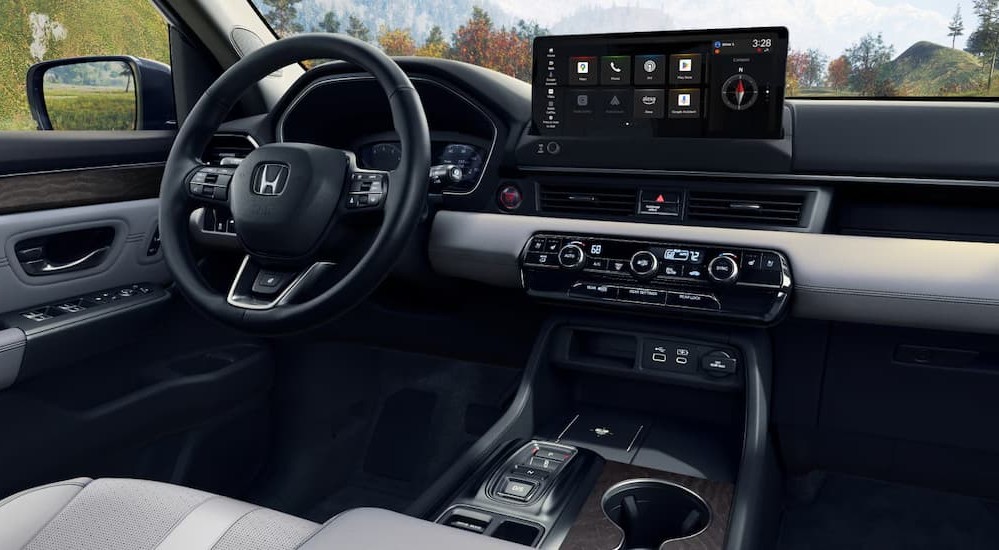
A new 12.3-inch infotainment display replaces the seven-inch version found on the 2025 model, providing drivers with 75% more space to work with when cueing up their favorite playlist, monitoring incoming texts and calls, or entering a new destination into the Pilot’s integrated GPS.
Buyers will also notice another improvement behind the steering wheel, where the standard seven-inch digital gauge cluster has been switched for a 10.2-inch design that was previously restricted to upper trims and optional equipment packages. The digital display offers plenty of customization potential with selectable designs, gauges, and widgets that give every driver the opportunity to create a bespoke dashboard.
The new displays might draw much of the attention, but they’re just a small part of the Pilot’s arsenal of advanced comfort, convenience and infotainment technology. Every 2026 trim comes with a standard tri-zone climate control system that enables each rider to dial-in the perfect temperature, while a wireless charger, an available 120-volt outlet, and plenty of USB ports keep everyone’s devices all juiced up and ready for whatever the day might have in store.
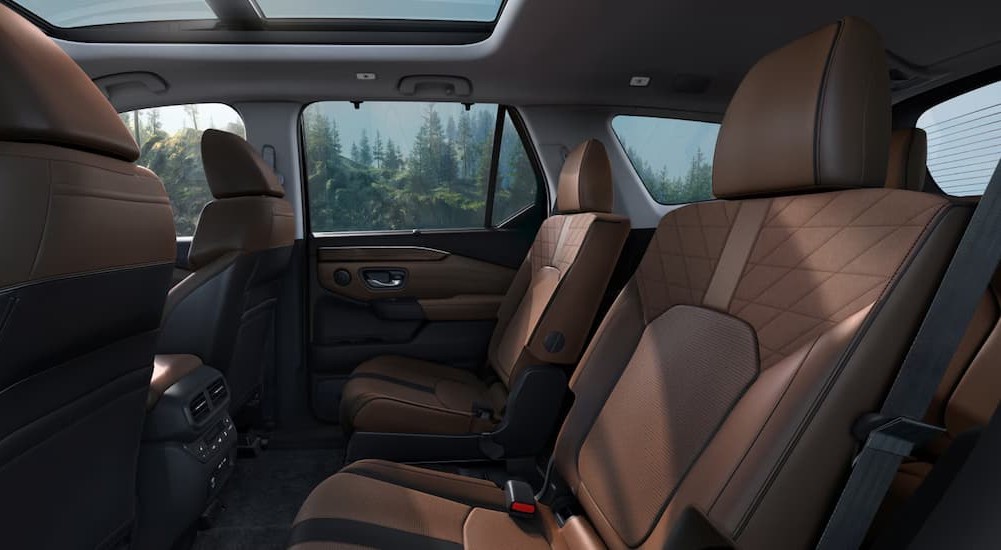
An ambient interior lighting feature can be used to create a customized cabin by adjusting the color and brightness, and while the base trim is equipped with a seven-speaker audio system, options with nine and twelve speakers are also on the table. Throw in a panoramic sunroof and a built-in Wi-Fi hotspot, and it’s easy to see why the Pilot holds so much appeal for discerning drivers.
#4 – New Cabin Technology
While efficiency and utility are certainly two significant selling points, it’s the ability to deliver a comfortable and responsive ride that has really made midsize crossovers a force to be reckoned with in today’s market. These SUVs offer the cargo space and towing ability of a traditional body-on-frame SUV or pickup while providing a responsive, car-like experience that represents the best of both worlds.
The Pilot has always driven a lot smaller than its three-row designation might suggest, and that’s only becoming more true as Honda unveils the 2026 model. The brand has outfitted the new Pilot with an electric power steering (EPS) system designed to enhance balance and precision. Improved weighting makes for a more stable and responsive ride, especially when cruising at highway speeds, and the EPS also provides natural feedback that goes a long way toward strengthening the car-driver connection.
The Pilot also enhances the comfort factor for 2026, with added insulation that helps create a tranquil cabin, even when navigating a noisy city or jockeying for position in rush-hour traffic. New hood and door insulators keep the commotion to a minimum, while sound-reducing front door windows and an acoustic-glass windshield serve a similar purpose.
It’s a clever bit of engineering from the experts at Honda, and while such features might not top anyone’s list when it comes to must-have tech, they can certainly elevate your commute. These upgrades almost make the Pilot’s inventive in-cabin PA system moot, but parents will still appreciate Honda’s CabinTalk when trying to keep third-row riders on their best behavior.
Elevate Your Ride With a 2026 Honda Pilot
While we’ve touched on some of the highlights of the 2026 Pilot, there’s still plenty of fun surprises to discover when you visit your local Honda dealer. Take the Pilot’s TrailSport trim, for instance; we haven’t spent too much time on this off-road trim for one simple reason: it’s best experienced in person.
Honda has equipped this adventure-ready SUV with all of the equipment you’ll need to confidently tackle the road less traveled, from a raised off-road-tuned suspension and all-terrain tires to a surround-view camera array, a sophisticated off-road stability management system, and Honda’s Trail Torque Logic (TTL) technology. TTl represents an integral part of Honda’s Intelligent Variable Torque Management (i-VTM4) AWD system, and it can quickly shift 75% of the SUV’s output to each rear wheel when the going gets rough.
The TrailSport also cuts an eye-catching figure with its rugged, sporty style and exclusive Ash Green Metallic exterior hue, and it includes a long list of premium features that’ll allow this off-road trim to double as a cozy daily driver. Whether you want to explore new terrain in the TrailSport, access cutting-edge safety tech like post-collision braking, or just turn a few heads as you cruise around town, the 2026 Honda Pilot is here to serve.