When you’re shopping for a new vehicle, the spec sheet can start to feel like an impenetrable wall of gibberish. While some common automotive terms like miles per gallon (MPG) and revolutions per minute (RPM) are easy to wrap your head around, jargon like horsepower and torque can easily overwhelm many drivers. The key to cutting through the noise all comes down to learning how to translate these secretive specs into a real-world context. Once you understand what each number means and how it plays out when you’re behind the wheel, it’s a lot easier to make a responsible, informed decision when you set out to buy your next vehicle.
Concepts like horsepower and torque might seem highly technical or oddly archaic, but at the end of the day, they basically just describe a model’s specific performance profile. As part of our ongoing effort to connect our readers with the car of their dreams, we’ve decided to break down these two widely misunderstood metrics. Join us as we explore the history behind each term and learn how horsepower and torque really play out where the rubber meets the road.
What Is Horsepower?
Before we dive into the specifics, let’s talk about where this unique term comes from. The modern steam engine fueled the Industrial Revolution of the late 18th and early 19th centuries, but it also posed real problems for marketing. Inventor James Watt was trying to help consumers understand just how efficient the new wave of steam-powered equipment could be, but was struggling to put it into terms that the average consumer could understand. This led Watt to create a new unit of measurement based on the output of what, up until the dawn of the steam engine, had been the go-to power source for a significant chunk of human history: the horse.
Watt observed horses at work in mills and mines and soon determined that the average steed could perform about 33,000 foot-pounds of work per minute. Foot-pounds of work can be a confusing concept on its own, but it’s basically defined as the amount of work required to lift 33,000 pounds by one foot over the course of one minute. This new unit of measurement was handy, if a bit problematic in terms of precision. In an effort to oversell the advantages of the steam engine, Watt intentionally based the 33,000 foot-pounds figure on a strong working horse exerting itself for a short period rather than an average horse expending average energy. In reality, a real horse tends to produce around 0.7 to 0.8 hp over a longer period, but the term was close enough for 18th-century purposes.
What Horsepower Means When Choosing A Vehicle
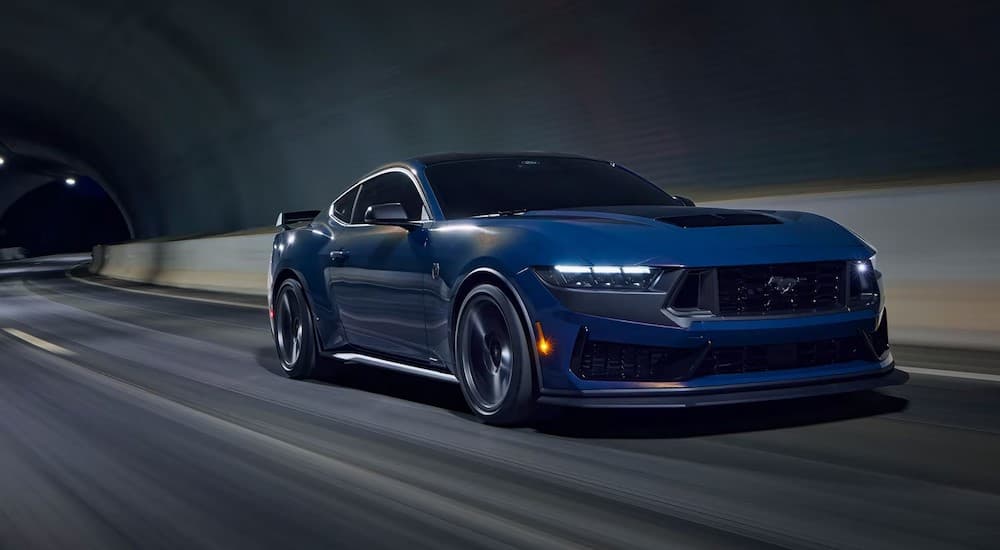
For much of history, horsepower remained largely an industrial measurement with little relevance to the average person. That changed with the advent of the modern automobile. The term allowed drivers to easily compare different models, providing a helpful bit of shorthand that could be used to quickly gauge a vehicle’s performance potential. Horsepower has increased dramatically over the years thanks to advancements in engineering and fuel technology. While the original 1913 Ford Model T boasted just around 20 hp, modern vehicles routinely offer anywhere between 150 and 300 hp, with performance models producing significantly more.
Comparing vehicles that occupy the same segment is one of the easiest ways to streamline the selection process. A 180-hp engine might be perfectly adequate under the hood of a compact car, but it would leave drivers feeling significantly underpowered if it were tasked with powering a full-size pickup. While there are plenty of exceptions, most segments tend to trend pretty close in terms of output.
- Compact cars: 150 to 200 hp
- Midsize and full-size SUVs: 250 to 350 hp
- Full-size pickups: 300 to 400 hp
- EVs and performance models: 300 to 600+ hp
It’s always tempting to opt for a little extra muscle, but buyers should consider horsepower based on how the vehicle will be used. If you’re simply seeking a reliable, efficient model for your daily commute, a 150- to 200-hp range is more than adequate for most applications. If you’re looking to enjoy a little more confidence behind the wheel and value acceleration and highway performance, 200 to 300 hp should be more than enough to get the job done.
If your vehicle can produce more than 300 hp, it’s probably been designed with either sheer performance or heavy-duty use in mind. A 300-hp engine can provide plenty of thrills, but it could also be overkill unless you’re routinely testing your vehicle’s limits. Higher horsepower won’t necessarily result in a better driving experience, but it’s a common misconception that it will.
What Is Torque?
While the term “horsepower” is widely credited to Watt, “torque” was much more of a group effort. Mathematicians, physicists, and engineers had long sought a way to describe such rotational force, with Archimedes laying the groundwork as early as the 3rd century BC. Galileo and Issac Newton would make their own contributions to the concept over the ages, but ultimately it was British engineer and physicist James Thomson who introduced the term “torque,” from the Latin torquēre, meaning “to twist,” in 1884. Fellow Brit Silvanus P. Thompson would provide the most succinct definition in the first edition of his “Dynamo-Electric Machinery.”
“Just as the Newtonian definition of force is that which produces or tends to produce motion (along a line), so torque may be defined as that which produces or tends to produce torsion (around an axis),” Thompson wrote. Ultimately, torque is just a measurement of rotational force, specifically the amount of twisting force applied to make something rotate. However, the concept can still be a little tough to wrap your mind around. If you’re having trouble, try thinking about it this way: torque is to twisting what force is to pushing.
What Torque Means When Choosing A Vehicle
What does twisting force have to do with a car? Torque can actually be very useful for understanding how quickly a vehicle can accelerate from a full stop, climb hills, and effectively tow a heavy load. Let’s crack open the toolbox for a little analogy. Think of torque like using a screwdriver. A short screwdriver makes it difficult to loosen a tight screw due to a lack of leverage, but a longer screwdriver provides more twisting force, even while exerting the same amount of effort. That twisting force is torque, and it’s one of the most relevant stats for any modern vehicle.
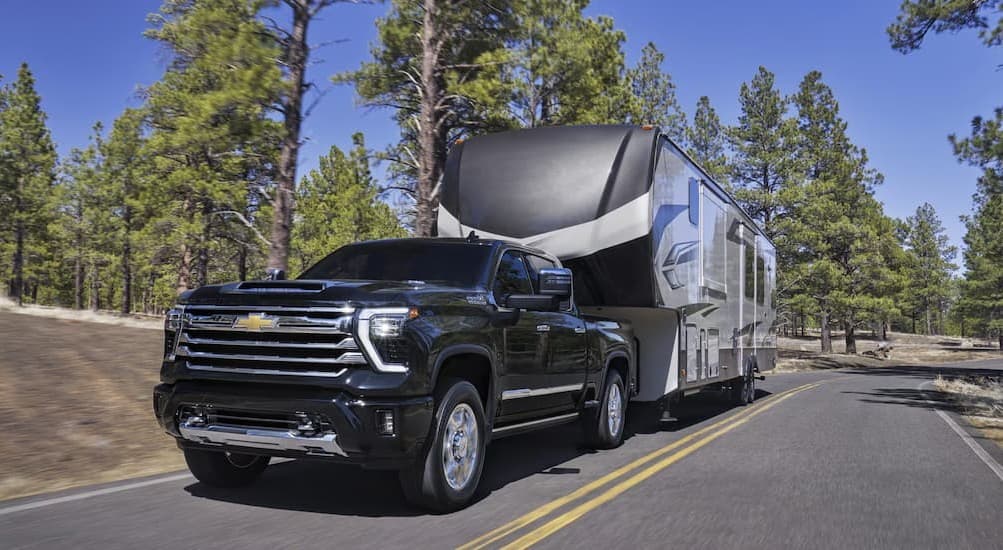
In an automotive context, the engine produces torque, which then travels through the drivetrain to the wheels. This torque is what actually gets the car moving. A high-torque engine is a lot like using a longer screwdriver, providing drivers with strong, immediate pulling power even at low speeds. Get behind the wheel of a torque-rich truck or SUV, step on the gas, and you’ll begin to move with authority, even when weighed down with a full trailer or facing a steep grade.
A low-torque setup is akin to using the shorter screwdriver. You’ll still be able to get the vehicle moving, but it’ll take considerably more engine speed. In an automotive context, this power comes down to a matter of RPMs (revolutions per minute). The less torque an engine has, the more RPMs it generally needs to reach its strongest power band and produce its best acceleration. This can lead to a slight delay when you’re behind the wheel and result in an underwhelming experience at lower speeds, especially when towing or climbing a hill.
High torque is generally considered to be 300+ lb-ft in passenger vehicles, or 400+ lb-ft in trucks and performance models. It’s common to find in pickup trucks, large SUVs, EVs, and turbocharged or diesel engines. High-torque engines provide strong acceleration with little effort, require lower RPMs to reach peak performance, and are more responsive at lower speeds and while climbing hills and towing.
Lower torque is anything under 200 lb-ft in most passenger vehicles. Compact cars, efficiency-focused models, and smaller, naturally aspirated engines tend to deliver lower torque. They are perfect for everyday commuting, but not heavy-duty driving, such as towing. They offer smooth, gradual acceleration but need more RPMs for optimal acceleration and are less responsive when fully loaded.
Your vehicle’s torque isn’t just affected by the engine itself. Gearing can have a major impact on how torque is delivered to the wheels, which is why a model might feel stronger in a lower gear and less powerful as you cycle through your options. Luckily, drivers don’t need to worry about the finer points of torque delivery, gearing, or power bands in order to find the perfect vehicle. Rather, just think about torque as a measure of how effectively a vehicle can put its power to work. A vehicle with high torque and lots of low-end power, like many of today’s full-size trucks, diesel models, and EVs, can produce a strong, immediate kick without much buildup, much like an Olympic sprinter. Meanwhile, a low-torque engine, like many of the smaller engines found in today’s compact models, builds its power more gradually and often needs to reach high RPMs to reach its full potential.
A high-torque model might seem like the obvious choice if you like to err on the side of power and utility, but there’s no reason to go overboard. Torque doesn’t directly translate into towing ability, but it can be a very useful metric for comparing the low-speed pulling power of two models. At the end of the day, you don’t really need a high-torque model for everyday driving. A less powerful engine might not be able to rocket you off the line, but it can provide smooth, even acceleration that’s more than adequate for most applications.
Making an Informed Choice
Understanding horsepower and torque is key when choosing the right vehicle, but ultimately, the trick is to think in terms of real-world impact rather than raw numbers. These two metrics can look intimidating on a densely-packed spec sheet, but they become a lot more useful when you start to think about them in terms of how you actually drive. Generally speaking, drivers can simplify the process by comparing models within the same category. A high-performance sports car or heavy-duty truck is going to look a lot different from a compact crossover on paper, and can lead to plenty of confusion when you’re researching your next purchase.
If your decision comes down to specs, there are a few simple guidelines to keep in mind. Torque makes a difference when it comes to models that are built with towing and low-speed strength in mind, but horsepower is the figure to focus on if passing power and high-speed performance are on your list of must-have features. Of course, torque and horsepower aren’t the only two figures to keep in mind when browsing new and pre-owned cars, trucks, and SUVs. Acceleration, fuel economy, cargo space, and passenger space are all important factors, as are safety features, infotainment tech, and other comfort and convenience features.
If you’re still feeling a little overwhelmed, have no fear. You don’t really need to understand every engineering detail to make a smart, informed purchase. Just focus on how you’ll use your next vehicle, and narrow down the list to models that suit your lifestyle and budget. These specs are useful for narrowing down your list of potential rides, but they’re no replacement for chemistry. A model might not jump off the stat sheet, but you could change your tune after a quick test drive. Keep an open mind, be realistic about what you expect from your next vehicle, and you’ll have no trouble finding one tailored to your driving lifestyle.