
There’s a lot of misinformation when it comes to today’s all-electric vehicles. From range and cold-weather performance to charging infrastructure and maintenance, it’s often hard to separate fact from fiction. Ultimately it’s cost that tends to be the hot-button issue in the modern EV market. For many shoppers, the high sticker price remains one of the biggest barriers to making the switch, even as EV technology becomes increasingly accessible.
While EVs were pretty pricey when they first hit the market, they’ve become a lot more affordable as the technology comes into its own. Lower battery prices have played a major role, but as electric vehicles continue to make inroads amongst drivers, it’s fair to ask the question: does an EV really save you money in the long term, and how does the cost of an all-electric model compare to a traditional internal-combustion vehicle? Join us as we break down the real cost of an EV and learn how these electric vehicles can lead to significant savings.
Upfront Price
We’ll start with the elephant in the room. EVs are more expensive in terms of average transaction price. A new all-electric model typically trades for around $56,000. That’s a considerable chunk of change, but some buyers might be surprised to learn that a purely gas-powered model isn’t much cheaper.
EV prices have been leveling off in recent years, but internal combustion models (including hybrids) have seen a steady rise, with new models now averaging around $48,000. That’s a smaller gap than many motorists might realize, and that’s before you even factor in the available incentives. While the lucrative $7,500 federal EV tax credit expired towards the end of 2025, manufacturer incentives, along with state and local programs, still allow drivers to save around $6,900, according to Cox Automotive.
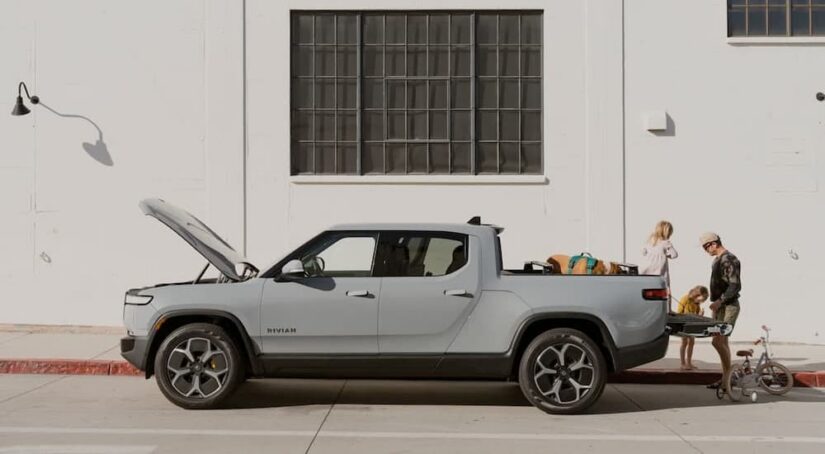
What’s behind the increasing affordability of EVs? More competition has certainly played a role. The EV market was once limited to a few upstart brands like Tesla and Rivian. That’s all changing as major brands jump on the all-electric bandwagon. Ford, GM, Hyundai, Kia, and Nissan have all entered the fray, increasing competition and driving down prices. Things are even cheaper in China, where, thanks to a domestic price war, new EVs are selling for just $25,300 on average.
That said, cratering battery costs have really fueled the recent EV surge. The battery is often the single most-expensive component in a modern EV. Lower raw material costs, improved manufacturing, and more efficient production processes have led to a dramatic drop in the average price of an EV battery over the last decade. As recently as 2015, the typical EV battery cost around $300/kWh. That figure has now fallen to just $108/kWh.
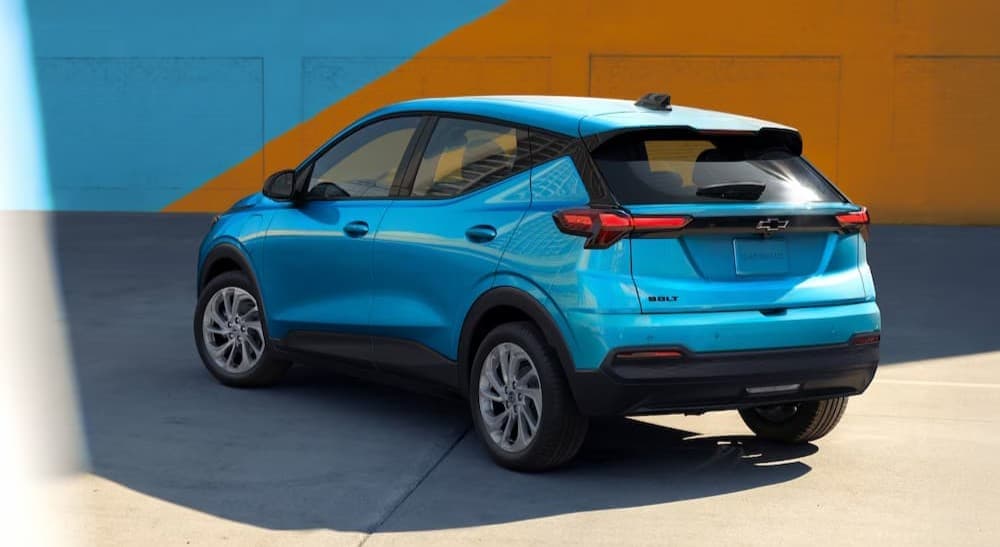
Throw in aggressive manufacturer discounts, improved production capacity, expanded charging networks, and a growing consumer acceptance of all-electric technology, and it’s safe to say that EVs have become more competitive in recent years. The Chevy Bolt is a prime example, returning after a three-year hiatus to reclaim its status as the market’s most affordable EV, with a starting price of just $27,600.
Fuel and Energy Costs
If you’re looking to exert more control over your fueling costs, an EV is the way to go. The average driver of a gas-powered vehicle spends around $2,252 on gas in any given year, but an all-electric model could easily see your energy costs cut in half. EVs represent a much more affordable proposition, with some drivers spending as little as $700 per year.
Some EVs even come with free charging credits, allowing drivers to use public stations for anywhere between one and three years. These free charging programs have become less common as EV gain market share, and are usually capped at a specific kilowatt-hour cap. Still, it’s a major selling point for many BMW, Mercedes-Benz, Audi, and Tesla EVs. Hyundai takes a different tack, offering buyers either a $400 charging credit or a free Level 2 home charger.
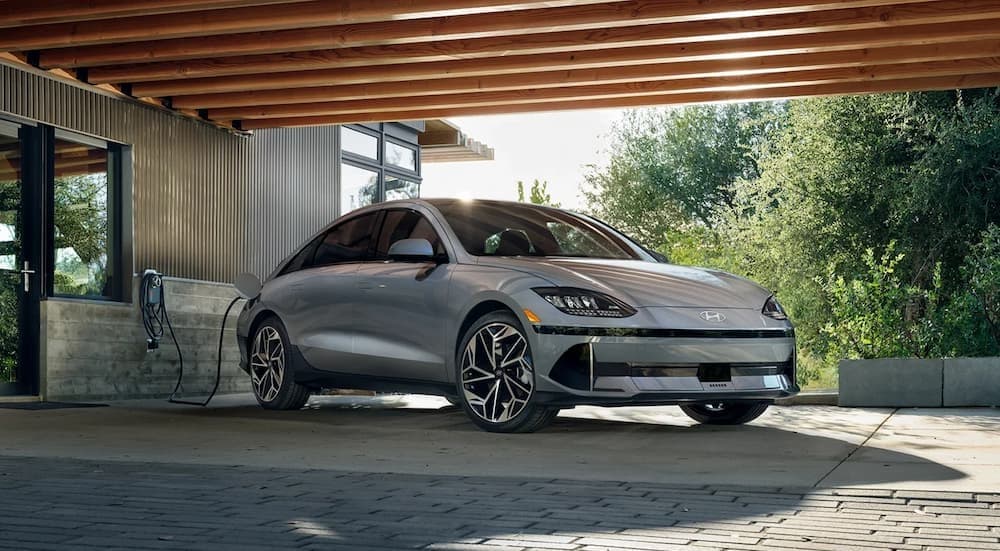
That’s a massive discount when compared to gas-powered models, but it all depends on where and when you charge your EV. Gas prices fluctuate throughout much of the country, but electricity prices are even more unpredictable. While gas prices ranged from $2.68 to $4.09 across regions in 2025, electricity prices ranged from 12.3¢/kWh in Idaho to 52.0¢/kWh in Hawaii. That means an EV driver in Boise might spend $461 to power their Hyundai IONIQ 6 in a given year, while someone on Oahu would pay $1,950 to power the same car.
You don’t have to cross state lines to see a major uptick in EV charging costs. Home charging is almost always the cheapest option, but rates quickly rise when you venture out into public. Let’s compare a few of the most popular options and learn how easy it is to get charged up without draining your budget.
Level 1 Charging
Miles added per hour: 2 to 5
Cost to charge battery (72 kWh at $0.18/kWh): $13
Annual cost: $617
Every EV is equipped with a simple Level 1 home charging system that plugs into a standard 120-volt household outlet. These Level 1 systems are affordable and don’t require professional installation, but they’re also pretty slow. While technology is improving all the time, most Level 1 systems are only capable of adding 2 to 5 miles of range per hour.
This lack of speed limits the practicality of Level 1 charging systems, though they might do the trick if you don’t spend much time behind the wheel and can stick to a nightly charging schedule. Speaking of scheduling, charging your EV at night allows drivers to take advantage of off-peak hours, when electricity rates are usually at their lowest.
Level 2 Charging
Miles added per hour: 20 to 40
Cost to charge battery (72 kWh at $0.25/kWh): $18
Annual cost: $857
Level 2 charging represents the sweet spot for many of today’s EV drivers. These Level 2 systems can add up to 40 miles of EV driving range per hour, making them a much more practical alternative to a Level 1 setup. They do require a bit of an investment from the driver. The charging unit itself isn’t that pricey at $500 to $800, but professional installation could set you back another $700 to $1,500, or add thousands if your electrical panel needs to be upgraded to accommodate a 240-volt connection. Fortunately, most homes already support 240-volt service, which is commonly used to power washers, dryers, mini-splits, and other large appliances.
Level 2 chargers also represent the most common option when it comes to public charging stations. Commonly found in the large parking lots that surround supermarkets, malls, and housing developments, these chargers are even making their way to traditional gas stations to give drivers a more eco-friendly alternative to fossil fuels. You can expect to pay a little more at one of these public charging stations when compared to a Level 2 home unit, but you should still be able to top off the typical battery for less than $20.
DC Fast Charging
Miles added per hour: 300
Cost to charge battery (72 kWh at $0.53/kWh): $38
Annual cost: $1,817
DC fast charging represents the gold standard in the world of all-electric vehicles. As the name implies, there’s no quicker way to replenish your battery than at one of these public fast charging stations. The Average DC fast charging station can add between 100 and 200 miles per 30 minutes, allowing drivers to replenish much of the EV’s range in less time than your average grocery run.
Unsurprisingly, drivers will pay a premium for this sort of speed, with a full charge costing nearly $40. That’s three times more expensive than a Level 1 system, but still pales in comparison to the average fill-up in an internal-combustion model. You might be able to fill a particularly efficient compact sedan for around $40, but your average pickup or large SUV will run you $95 to $115, or as much as $150 in a heavy-duty truck.
Maintenance and Repair Costs
EVs have a clear advantage when it comes to fuel costs, but many drivers don’t realize that choosing an all-electric vehicle could also lead to some serious savings when it comes time to address standard maintenance and repair tasks. This might seem a little counterintuitive in a world where newer technology is often pricey to repair, but it all comes down to the relative simplicity of the EV approach.
While the powertrain of an internal-combustion vehicle is composed of some 200 parts working in perfect harmony, the average EV is ultimately powered by as few as 20 individual moving parts. Some of these parts are pretty expensive, especially when it comes to the battery itself. While an EV battery can ring in between $6,000 and $15,000, replacement is rare, with the average battery designed to last for much of the vehicle’s lifespan.
There’s also simply a whole lot less that can go wrong when you’re behind the wheel of an all-electric vehicle. An electric motor is incredibly simple when compared to your average gas engine, but that’s just one of the benefits of the EV approach. Electric vehicles also lack the exhaust, fuel and oil systems that come with an internal-combustion engine. While they are equipped with a transmission, it’s usually a single-speed reduction gear rather than the complex multi-speed automatic or continuously-variable transmission (CVT) found in traditional models.
Exactly how much do you stand to save in terms of maintenance and repair costs by going with an EV? According to a Consumer Reports study, EV maintenance costs are 50% lower than those of gas-powered vehicles. That’s not to say EVs are totally maintenance-free. The weight and instant torque of an EV can do a real number of the tires and necessitate frequent replacement. You’ll still need to keep an eye on other common maintenance tasks, including:
- Cabin air filters
- Brake fluid
- Coolant on some models
- Wheel alignment
- Suspension components
- Windshield wipers
- Other normal wear items
Save More with an EV
While upfront prices might still be relatively high, modern all-electric vehicles are still a great bargain when you factor in charging, repair, and maintenance costs. That initial premium is a lot easier to stomach when you factor in lifetime expenditures, and that’s not even touching on all the ecological advantages. An EV can save the average driver hundreds or even thousands of dollars in a given year, depending on how, where, and when you drive.
If you want to take control of your lifetime operating costs, a reliable home charging setup is the place to start. While a Level 2 system might require a bit of an investment if your home isn’t equipped with a 240-volt outlet, it’s sure to pay for itself with those low-cost charging sessions that can give you a full charge for less than $20. Relying solely on public DC fast charging stations makes an EV a little less affordable, but it’s still a good deal, especially in an age of ever-changing fuel prices.
Does skipping the gas pump in favor of an EV really save money? The answer is a solid yes. While tax incentives and rebate programs have largely dried up, expanding public charging networks, increasingly competitive prices, and the savings from lower charging, repair, and maintenance costs make investing in an all-electric vehicle a savvy financial move.