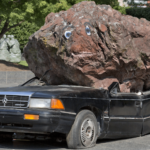
The Luddites were a group of 19th-century English textile workers who protested the introduction of automated machines, which they viewed as a threat to their working conditions, wages, and livelihood. Prone to destroying power looms, spinning mules, and other fruits of the Industrial Revolution, the Luddites earned plenty of press but were ultimately unable to stem the tide of technological progress. That said, they left an indelible mark on the English language, as the term “Luddite” is now commonly used to describe a person who is opposed to new and emerging technology.
We’re not advocating that readers sabotage their daily driver, but we certainly understand the appeal of a simple, straightforward vehicle that gets you from Point A to Point B without all the bells, whistles, and automated systems that define many of today’s vehicles. While some drivers actively seek out the most cutting-edge models, others are a little suspicious of screens, touch-based controls, and automated systems that, although convenient, can be clunky, distracting, and expensive to fix should something go awry. Luckily, there are still some lower-tech options on the market for those modern-day Luddites who prefer the old-fashioned approach. Some of these models owe their lack of contemporary tech to their low starting price, while others are intentionally designed with a more minimalist ethos that puts the driving experience front and center. Let’s review some of the best options on the market as we explore a few of our favorite low-tech gems.
Third-Generation Nissan Versa (2012 to present)
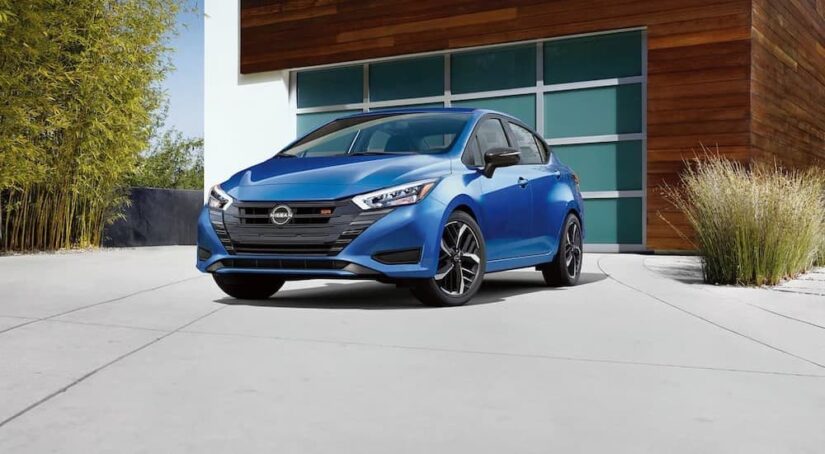
For almost 20 years, the Nissan Versa has been one of the auto industry’s most affordable models, though that run could soon come to an end. There have been some conflicting reports about the Versa’s demise, with some outlets suggesting that the 2025 version could be the compact’s last hurrah. Even if Nissan does roll out a 2026 model, odds are it’ll be the car’s last year on the market. That’s a shame, because while it was never going to win you any drag races, and could often feel a little comically undersized on the highway, there’s something to be said for a car made in 2025 that can be procured for less than $20,000.
It’s not hard to see how Nissan has managed to keep the Versa’s price so low. The thrifty compact is about as basic as they come, especially towards the lower end of the trim ladder. Just take the entry-level S model, for example. Nissan hasn’t been stingy when it comes to safety tech, with the Versa boasting lane departure and forward collision warning systems, automatic emergency braking, and automatic high beams. However, aside from its 7.0-inch infotainment display and USB ports, it wouldn’t be difficult to mistake the interior for a model straight out of the early 2000s. Bluetooth connectivity comes standard, but smartphone integration apps like Apple CarPlay and Android Auto are nowhere to be found on the base model. The SV adds both of these features and a wireless charging pad, but otherwise opts for an analogue approach that could be a breath of fresh air for those who are tired of digital dominance.
The top SR trim adds a little more technology, including an automatic climate control system, a six-speaker audio system, and adaptive cruise control that wouldn’t look out of place on most base models. The infotainment display grows by an entire inch on the top trim, with the SR featuring an 8.0-inch display, but that’s more than understandable when you factor in the starting price below $22,000. The 2026 model is also expected to drop the standard five-speed manual transmission currently available only on the base model in favor of the standard continuously variable automatic transmission (CVT) across all trims. We’ll be sad to see the Versa go, but it might just be a case of “see you later,” as Nissan has recently confirmed plans to launch 14 new and updated models, including the popular Versa, by 2027.
Fifth-Generation Toyota 4Runner (2010 to 2024)
The Toyota 4Runner’s reliability is one of its biggest selling points, but that same reputation has led the midsize SUV to stick to a glacial development cycle, allowing it to be quickly surpassed in terms of technology. The 4Runner’s famous longevity means that Toyota could bide its time in creating a new model, and that’s exactly what it did. While Toyota recently introduced the all-new sixth-generation model for 2025, the fifth-generation 4Runner enjoyed a marathon run, spanning some 14 years between generations.
Toyota’s kaizen, or “continual improvement,” philosophy meant that the 4Runner was treated to numerous upgrades over the last decade and a half. However, a model originally produced in 2009 will always lack some of the technology found in newer cars, trucks, and SUVs. The 2024 version of the 4Runner was equipped with an 8.0-inch touchscreen infotainment system that only the Versa could envy, as well as physical buttons and controls across the dashboard. Wired Apple CarPlay and Android Auto were standard, and a subscription-based Wi-Fi hotspot was available, but aside from some optional enhancements, the 4Runner was about as underwhelming as they come from a tech perspective. The SUV’s off-road credentials are a different story, with every trim offering some level of adventure-ready functionality, and the TRD Off-Road, TRD Off-Road Premium, and TRD Pro catering to serious off-road drivers.
The 4Runner has been able to skate by with an outdated tech resume thanks to its niche appeal. Those who gravitate towards the legendary off-road model tend to be focused on rugged, purpose-built components that enable them to find success on the road less traveled, from tuned, lifted suspensions and premium dampers to all-terrain tires, skid plates, and locking rear differentials. The 4Runner features all that and more, which is why we give it a pass for its antiquated interior.
Fourth-Generation Mazda MX-5 Miata (2015 to Present)
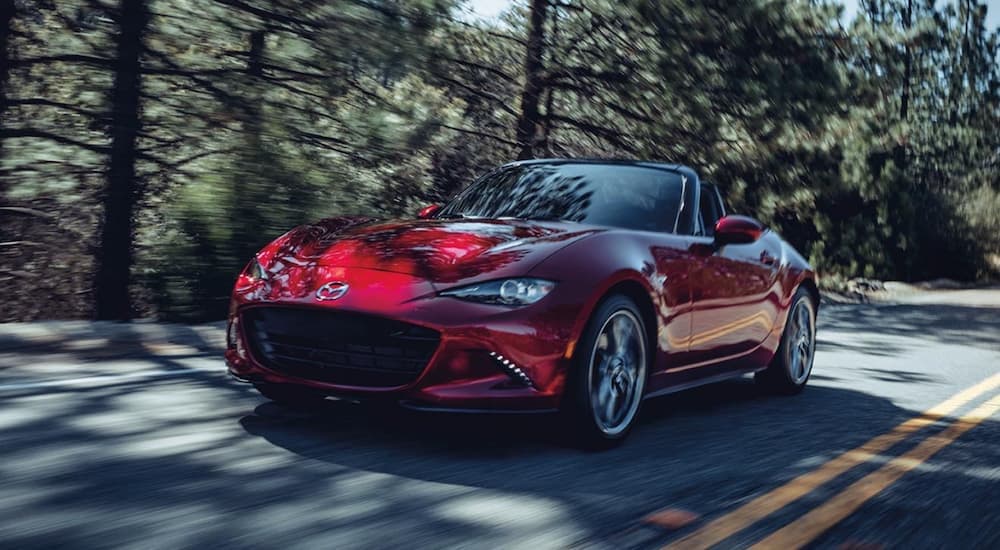
Low-tech doesn’t necessarily mean low-fun, which is something that the Mazda Miata has proven time and time again during its 30-plus years on the market. The current fourth-generation Miata isn’t the fastest sport compact around, with a naturally aspirated four-cylinder that tops out at 181 hp, but the brand’s “lighter is better” approach means that the Mazda achieves a power-to-weight ratio that ensures a lively, engaging ride. The Miata weighs in at just 2,454 lbs and can sprint from zero to 60 mph in as little as 5.5 seconds when equipped with the standard six-speed manual transmission, and can achieve a top speed of 139 mph. This also makes the Miata an exceedingly efficient option, achieving an EPA-estimated 26 MPG in the city and up to 35 MPG on the highway.
Mazda has managed to keep the Miata so svelte mainly by eliminating any components that aren’t absolutely necessary. You won’t find heated, ventilated, or power-adjustable seats on most Miatas. Every model is equipped with just two seats and a noticeable shortage of storage space, with a bulkhead occupying much of the space behind the front row. While the MX-5 RF features a power-retractable targa top, the standard roadster is equipped with a soft top that further reduces the car’s weight. Mazda has begun to incorporate a few modern touches into recent models, but one gets the sense that this has been done rather begrudgingly, with the sport compact offering the bare minimum with its 8.8-inch touchscreen infotainment system, Bluetooth connectivity, and Apple CarPlay/Android Auto smartphone integration. The automaker has always caved when it comes to advanced driver-assistance systems (ADAS), with several key features, such as automated emergency braking with forward-collision warning, blind-spot monitoring with rear-cross traffic alert, and adaptive cruise control, offered as standard fare.
It would be easy to characterize the Miata as something of a relic on the modern market, but when you offer the sort of fun, engaging driving experience that car can deliver, we’re inclined to overlook the lack of advanced tech features. The Miata perfectly embodies the “Jinba Ittai” philosophy that drives Mazda’s current design process, a term that characterizes the seamless connection between a rider and their horse. It might be difficult to explain in words, but simply saddle up the Miata, and you’ll find a pure, distraction-free ride that’s been winning over drivers for decades.
Slate Truck (Debuts late 2026)
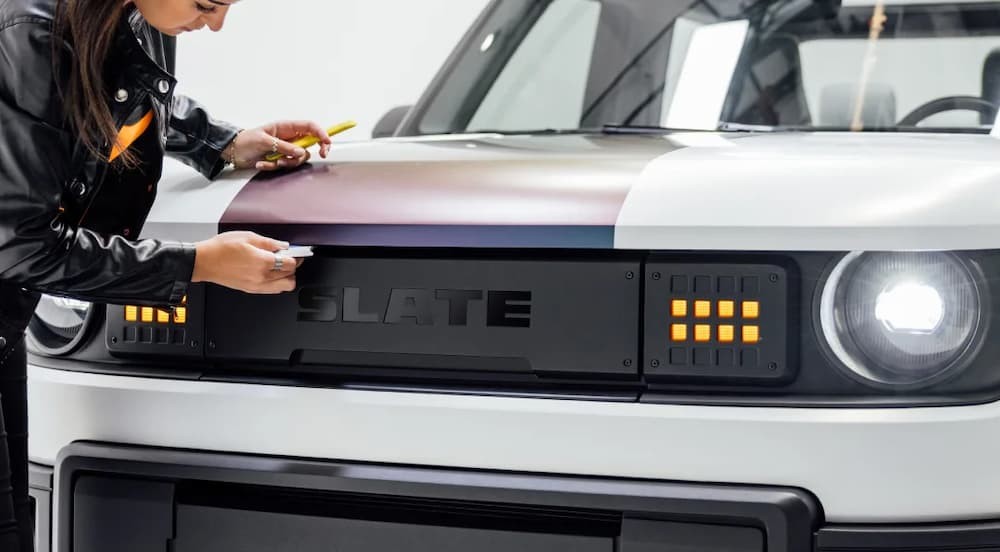
Finally, we look down the road at an all-electric pickup that’s so focused on value and simplicity that the brand behind it didn’t even waste money on a focus group to come up with a unique name. The Slate Truck is marketed as a no-frills, compact EV that lacks even some of the most basic comfort and convenience features, which is a significant part of its appeal. The pickup isn’t even painted, and is designed with traditional crank-style windows, manual climate controls, and a 4.0-inch digital instrument cluster that represents the Slate’s sole screen. In fact, the automaker has only included the display to provide drivers with the legally mandated backup camera, although the vehicle does come with power locks and cruise control. It’s a refreshing approach in a segment where pricey trims, optional add-ons, and increasingly posh cabins have seen the average price of a new pickup rise by some $10,000 over the last decade. Slate says the price will be somewhere “in the mid-twenties.” While the decision to discontinue federal EV tax credits has seen the truck lose its initial sub-$20,000 appeal, the price could dip lower once any state or local credits and incentives are applied.
How has this newcomer managed to craft such an affordable pickup? First, the company has considerable resources and a robust supply chain at its disposal, thanks to a roster of well-heeled investors that includes Amazon founder Jeff Bezos and Los Angeles Dodgers owner Mark Walter. Second, the company has cut costs wherever possible to provide drivers with a literal blank Slate that can be used as a starting point to create a bespoke pickup or SUV. Slate offers a comprehensive catalog of add-ons, ranging from extended-range batteries and heated seats to power windows and wrap kits, as well as “Starter Kits” that can transform the truck into a wide range of purpose-built vehicles.
The Builder Starter Pack transforms the EV into a ready-made work truck, complete with roof and tower racks, while the Beach Bound Starter Pack gives the Slate its best Jeep Wrangler impression with its open-air design. The Lucky 77 is something of a sport truck, and the Mud Master Starter Pack is designed with off-roading in mind. Slate will offer 25 Starter Packs in total. While spec’ing a fully equipped truck could run drivers as much as $40,000, the pickup should still represent one of the most affordable options on the market in its basic form.
Low-Tech, Big Value
The Versa’s value can’t be denied, and while its low price is reflected in its spartan cabin, that might only serve to up the compact’s appeal for those seeking a more simplified experience. The 4Runner and Miata can both be forgiven for their low-tech approach thanks to the sort of fun these two models provide, whether it’s exploring your local off-road trails or deftly carving through the corners on a scenic route. Time will tell if the Slate Truck will live up to the hype, but it does represent a bold new idea that could radically transform the industry thanks to its low cost and high customization potential. Of course, there’s always another option if you’re in the market for a simple, low-tech ride: a used vehicle. Shopping the pre-owned market is a great option for those who are indifferent or antagonistic about today’s tech-heavy designs, and can be had for a steep discount compared to many newer models.