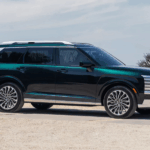
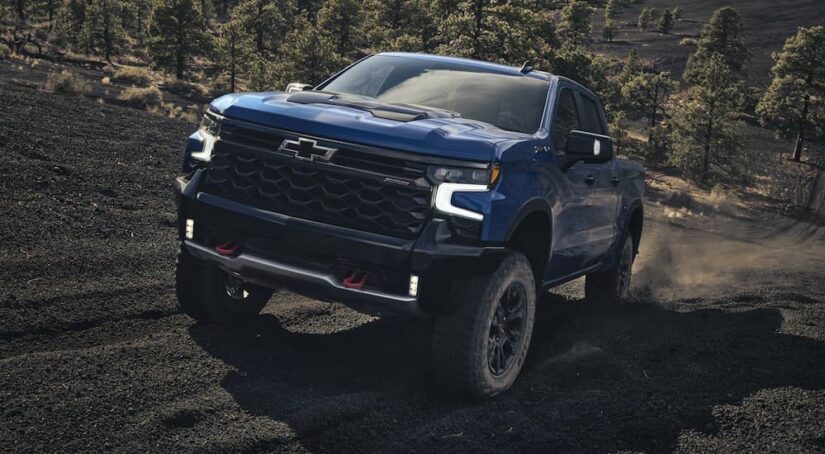
It’s always good to be prepared, but there’s such a thing as overkill when you’re choosing a new vehicle. Many of today’s off-road trucks and SUVs can handle some of the toughest off-road conditions the trail has to offer, including scaling sheer rock faces and speeding through desert landscapes at up to 90 mph.
Do you really need that sort of setup? For most drivers, winches, locking differentials, long-travel suspensions, and other heavy-duty off-road components aren’t nearly as important as basic gear like AWD/4WD, all-terrain tires, and some good ground clearance. Sure, it’s nice to know that your off-road pickup is equipped to handle extreme conditions, but some dedicated off-road gear can actually make for a less comfortable, less efficient ride, or even pose safety concerns with things like lift kits and mud-terrain tires.
In an ongoing effort to connect our readers with the right car for their unique driving lifestyle, we’ve compiled a quick list ranking the importance of various off-road features. From traction control systems to customizable driving modes and more, join us as we learn what you need when it comes to dealing with off-road terrain.
1: All-Terrain Tires
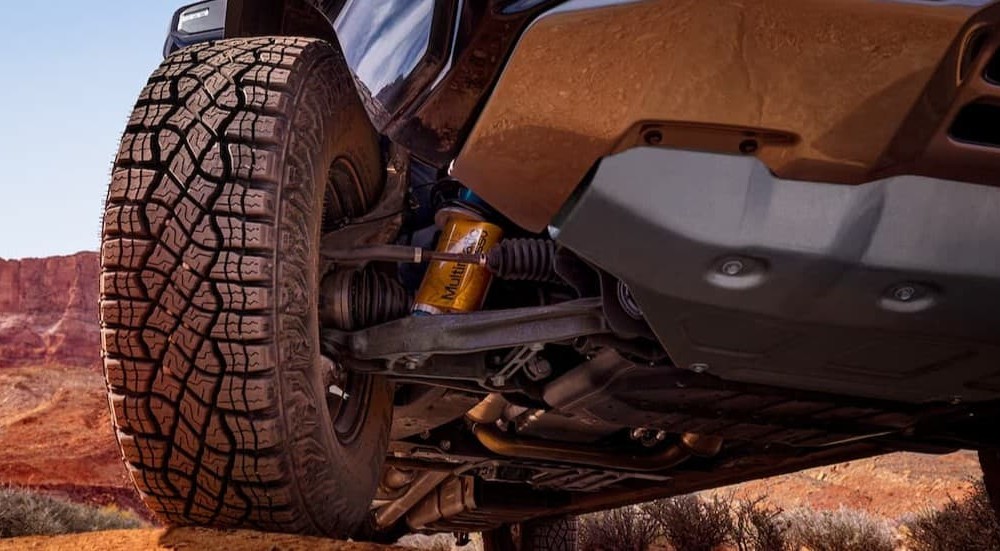
It might seem relatively basic, but no component determines your chances of off-road success quite as much as a good set of tires. An advanced 4WD system, traction control, and even a brawny engine with plenty of low-end torque aren’t worth much if you’re skimping out where the rubber meets the road.
Think of it this way. Even the most accomplished alpinist wouldn’t try to summit a peak in a pair of flip-flops. An Olympic sprinter isn’t about to log a new world record while wearing dress shoes. Traction is truly the be-all, end-all in the world of off-road driving, and it all starts with finding the right set of tires.
All-terrain tires provide a good one-size-fits-all solution for most off-road applications, offering more traction than your typical all-season tires. Mud-terrain, rugged-terrain, and rock-crawling tires are fine for specific scenarios, but their heft and tread design can lead to a noisy, inefficient ride in everyday driving. Winter tires might do the trick if snow is your only worry, but they aren’t designed for year-round use. Unless you have a specific need for specialized tires, a good set of all-terrains provides the best balance of off-road and on-road traction.
2: All-Wheel Drive / Four-Wheel Drive
They say many hands make light work, and it’s the same with your wheels. The ability to send power to all four wheels allows drivers to better deal with snow, mud, loose gravel, and other road conditions that might leave the wheels spinning on a lesser model.
Most of today’s cars and small SUVs use front-wheel drive, while larger entry-level trucks and SUVs use rear-wheel drive. Most brands introduce more sophisticated setups as you climb the trim ladder, with larger SUVs embracing all-wheel drive and pickups leveraging four-wheel drive powertrains.
But which is better, AWD or 4WD? It depends on the situation. Those who tend to limit their travels to on-road scenarios can easily get away with AWD. If your average commute includes regular off-road driving, or you’re looking for a daily driver that can double as a go-anywhere adventure rig on the weekends, there’s no substitute for a good 4WD setup.
3: Traction Control
Traction control is another key weapon in the fight for traction. It’s not unusual to experience a little wheelspin when encountering slick, wet, or wintry roads, but it can be a bit unsettling. This wheelspin not only causes a brief loss of acceleration but can also lead to a dangerous loss of control and make the vehicle more difficult to steer.
Modern traction control systems address this issue by using a network of sensors to detect wheel spin, then reduce engine power or apply the brakes to the individual spinning wheel(s). This allows the vehicle’s torque to be redirected where it’s needed most, specifically the wheels with greater traction.
Many high-end off-road models are equipped with a locking differential that achieves the same goal in a different way. By mechanically linking the wheels on the same axle, a locking differential forces both wheels to turn together, allowing the wheel with traction to enjoy plenty of torque when the other wheel loses grip. A locking differential is more than most drivers will need for their average off-road duties and often requires manual engagement, whereas most traction control systems provide a more seamless experience.
4: Ground Clearance
It’s not a specific component so much as a basic design attribute, but it’s important to consider ground clearance when gauging a vehicle’s off-road resume. It doesn’t take an engineer to understand the importance of ground clearance, especially when it comes to preventing underbody damage or becoming mired in the muck on a muddy dirt road.
A vehicle with good ground clearance can easily clear rocks, logs, and other off-road obstacles, not to mention mud, snow, and surfaces that might otherwise conspire to slow you down. While those in warmer climates might be able to get away with a relatively low-riding vehicle, drivers who regularly encounter harsh winter weather should consider a higher-riding vehicle.
5: Terrain Management Systems
In the time before vehicles basically became half-computer, drivers had all sorts of creative ways of tackling different terrain. Two-speed transfer cases, manual hubs, and even tire pressure adjustments were common strategies for dealing with snow, mud, sand, and other terrain.
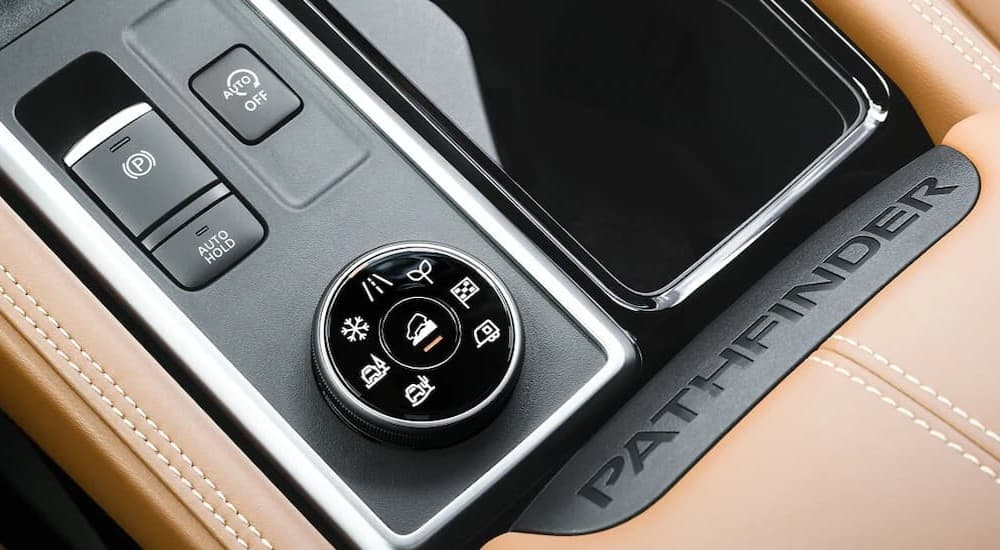
The auto industry has come a long way in the last few decades. Many of today’s crossovers, full-size SUVs, and pickups are equipped with terrain-management systems (TMS) that represent the digital evolution of the old analog methods. These systems vary by manufacturer, from Ford’s Terrain Management System to Toyota’s Multi-Terrain Select, Hyundai/Kia’s Multi-Terrain Mode, and Subaru’s X-Mode, but they work in a pretty similar way.
When you select between different settings like Snow, Sand, Mud/Ruts, and Rock Crawl, these TMS can quickly adjust everything from a vehicle’s throttle and braking response to its transmission, traction control, suspension, engine braking, steering, and more. This comes in clutch when trying to reduce wheelspin or adjust a vehicle’s AWD system in response to changing road conditions. Best of all, you don’t need to understand the finer points of automotive design to enjoy a safe, confident driving experience. When the white stuff starts flying, or you run into a sticky stretch of road, just hit “Snow” or “Mud” mode, and your vehicle will do the rest.
Find the Right Fit
It’s important to remember that off-road ability and everyday practicality don’t always go hand in hand. It’s easy to get caught up in impressive specs and heavy-duty parts, but the best vehicle is one that conforms to your daily driving needs, not the other way around.
The average driver is ultimately going to get a lot more out of a modest vehicle that can confidently handle a snowy commute or a muddy dirt road than from a dedicated off-road machine designed to pick its way through boulder-strewn fields or ford a rushing stream. Enjoying a confident ride is one thing, but many off-road models also require drivers to make significant sacrifices in comfort and fuel economy.
A little extra traction and ground clearance will certainly go a long way when winter weather hits, and the right set of tires can make a world of difference when you leave paved roads behind. When it comes to some of the market’s more rugged off-road models, a little restraint can lead to a much more satisfying experience behind the wheel.