The electric vehicle market is buzzing about the new Rivian R2, a fresh addition to the all-electric manufacturer’s lineup. Rivian hasn’t been around long, so those of us alive today are witnessing something that doesn’t happen every decade: the development of a new, mainstream automobile manufacturer.
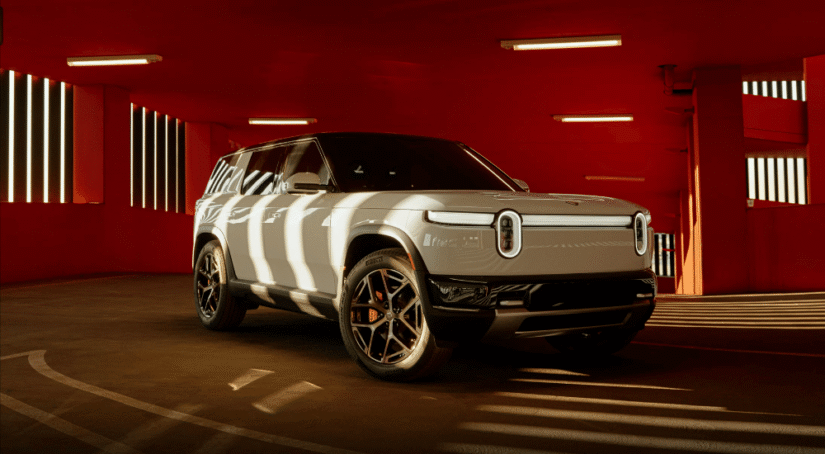
Since the company is so new, it’s still building out its lineup. Until recently, it only included two closely related vehicles: the R1S and the R1T. The R1S is a three-row SUV, while the R1T is a full-size truck. For the 2027 lineup, Rivian has added the R2, a compact SUV.
Now the question is: should you buy the R1S, or wait for the R2? I personally know a few people facing this dilemma because they’ve been considering the R1S for some time, but have hesitated due to its high price tag. The R2 addresses that concern, but you’ll have to wait to get it, as it’s only just entered production and many of its options won’t be available until next year.
Here are the major differences between the models to consider.
Range
Like with any electric vehicle, range is always a top consideration for drivers. Luckily, most EVs today boast ranges that just about rival those of traditional gas models and Rivian has adopted the modern NACS port for all of its models. But it is important to note that the R2’s range is slightly lower than the R1S.
The R1S has up to 410 miles of range when equipped with its Dual Max powertrain option. In contrast, the R2’s maximum range is 345 miles. So you can drive approximately an additional 65 miles in the R1S before you need to plug in, compared to the R2.
This might not be a big deal if you don’t do a lot of driving, but if you like long trips or simply have to commute far for work, plugging in more often can get bothersome.
Price
This is a huge one, and it’s kind of one of the reasons Rivian made the R2: price. For some time, a major consumer complaint about the limited Rivian offerings has been cost. The 2026 R1S starts at $77,000, after all. And it goes all the way up to $126,000 at its top trim. The 2026 R1T, for reference, starts at just under $73,000.
As you can see, Rivian came out of the gates in the distinctly luxury price range. With the introduction of the R2, Rivian is finally welcoming shoppers looking for something in the under-$50,000 range—a major consumer group it was previously failing to serve.

Performance
As for performance, the R2 gets pretty close to being able to do what the R1S does. Both offer AWD, so they are ready for some wet roads and dirt trails. Where the two differentiate, however, is in their available drive modes. The R2 has some of the drive modes that the R1S does, but the R1S offers a couple more.
Here are the R1S drive modes:
- All-Purpose, which blends performance, efficiency, and comfort, is right for daily driving.
- All-Terrain, which can handle obstacles on the trail, like mud, ruts, and even three feet of water.
- Drift, which adjusts traction control and torque vectoring for its namesake maneuver.
- Snow, which softens acceleration and braking for more control on winter roads.
- Soft Sand, which prevents your wheels from getting stuck in sand dunes.
- Sport, which boosts torque for exhilarating acceleration and reduces body roll for better control when taking corners at high speeds.
- Rally, which is made for high speeds on rough terrain.
- Rock Crawl, which enables you to crawl a 100 percent grade and conquer any terrain.
As for the R2, it has a simpler list of drive modes that is missing Drift and Rock Crawl. So, while the R2 can handle most situations, it’s not ready for some of the more aggressive off-road situations that might involve boulders, and it is not going to let you do any drifting on the track.
Towing
The R1S can tow up to 7,700 lbs, while the R2 can tow up to 4,400 lbs. That’s clearly a significant difference, but 4,400 lbs is still impressive as far as compact SUVs go—especially EV compact SUVs. Ultimately, just ask yourself what types of rigs you need to tow.
The R2 can tow things like:
- Single-axle trailers
- Two jet skis
- Pop-up campers
So your R2 is great for weekend camping and some lightweight utility.
The R1S can tow items like:
- Dual-axle trailers
- Wake boats and fishing boats
- 20 to 30-foot campers
- Two-horse trailers
- An additional vehicle
If you’re going on longer trips with a bigger camper or need to haul something substantial like a whole other car, the R1S is your better bet.

Size
As a compact SUV, the R2 can only carry five passengers. The R1S can accommodate seven riders; that alone might be the dealbreaker for you. But if you don’t need to transport that many passengers, you might like the smaller R2, thanks to its compact footprint, which makes parking in compact spots a breeze.
The R1S also has more cargo room in the back when the rear seats are down. However, the R2 does make up for that with some seriously thoughtful cargo compartments throughout the cabin, including a second glove box up front. If you’re less concerned with big, bulky cargo and more focused on small odds and ends, the R2 might be all you need.
On the topic of cargo space, though, both offer a super useful hatch design at the back. Both have a design that lets you reach in and grab items without completely opening the liftgate. This comes in handy when you have a four-legged companion you don’t want jumping out of the back when you grab essentials.
However, this is designed a bit differently in the R2 vs R1S. The R2 has a power-retractable rear window. The R1S rear window is fixed, so you can’t raise and lower it for airflow while you’re driving like you can in the R2. Instead, it has a two-piece liftgate that lets you open the top half separately from the bottom.
The R2 Costs Much Less, Without Offering Much Less
If you’ve been wondering whether now is the right time to get your first Rivian, the introduction of the R2 might be your sign! The first examples are currently rolling off the production line, and you can already place reservations. Starting at roughly $25,000 less than the R1S, the R2 welcomes more wallet-conscious shoppers into the Rivian lineup.
The R2 could be right for you if you only need seating for five, want more city-friendly dimensions than the R1S, and do some light off-roading or performance driving. I say “light” because the R2 lacks the Rock Crawl and Drift drive modes of the R1S. Still, with its many other drive modes, it can easily be a solid camping vehicle.