The public holds conflicting opinions about electric vehicles (EVs), so if you’re considering an EV for the first time, it can be difficult to know who to listen to.
To get to the bottom of things, we sat down with three EV owners to discuss their experiences. What we discovered was that all three, despite owning different models and living in different states, broadly agreed on most aspects of EV ownership.
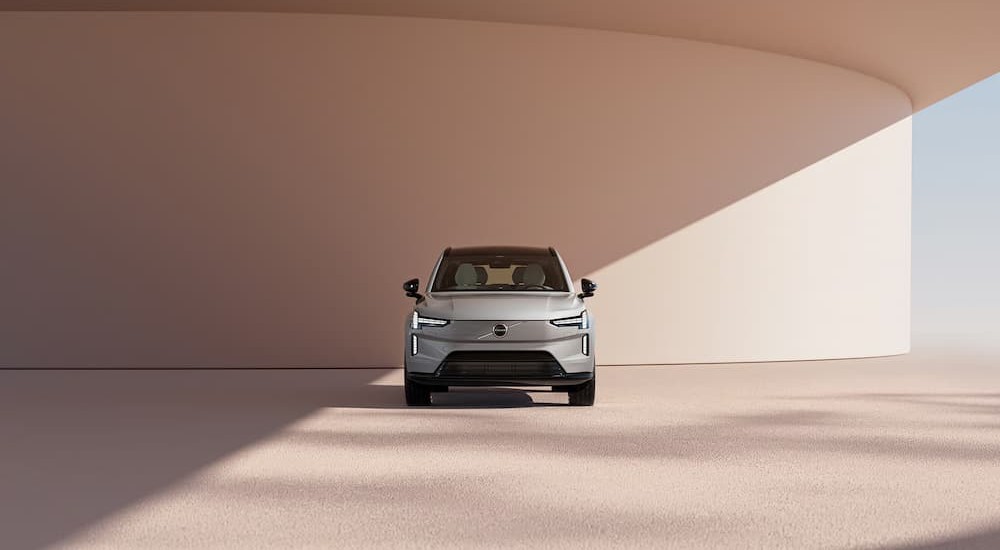
Michaela was a fairly early EV adopter, as she and her husband bought a Tesla Model Y Performance four years ago. When that car was out of warranty, they traded it in for a Volvo EX90. This makes her the most experienced of our three EV owners.
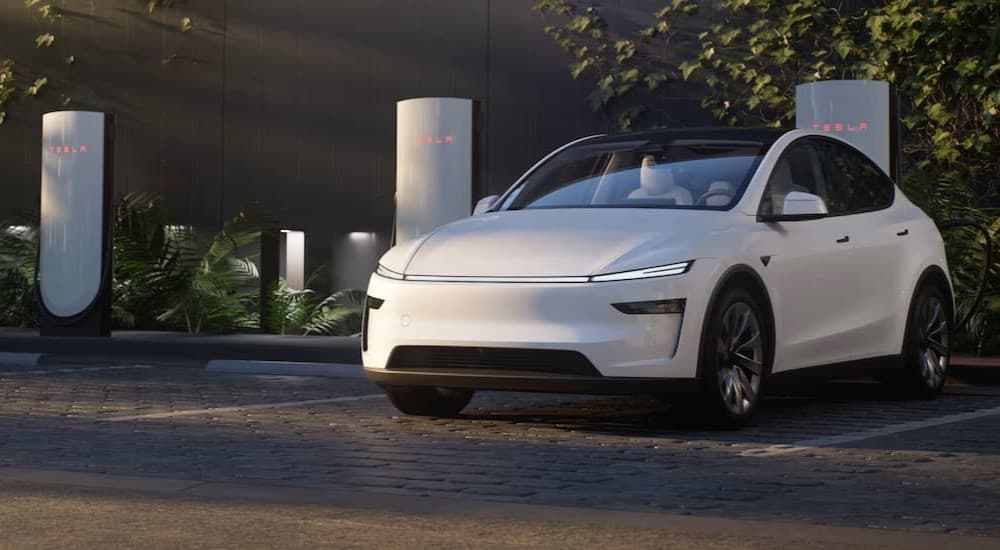
Josh also purchased a Tesla Model Y Performance, but he has only had his for about a year. He also bought his EV pre-owned, which gave him a different perspective on the challenges shoppers face when considering the used EV market.
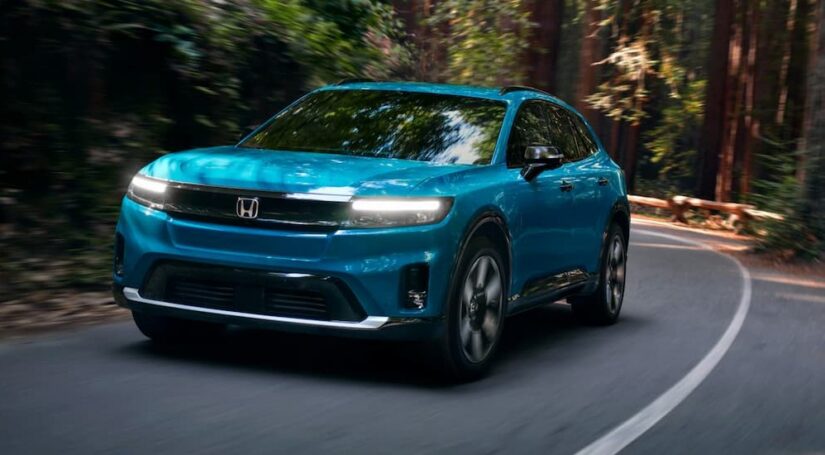
Finally, Sommer is another recent EV owner who has leased a Honda Prologue. Her experiences illustrate some of the potential pitfalls of buying a new model from a brand with limited experience selling EVs.
Why Choose an EV? Ask Your Wallet
EV manufacturers tout many benefits of electrification, but for our three EV owners, one main factor drove their decision: saving money. This didn’t just include saving on gas, but also on the vehicles themselves.
Michaela had the most conventional EV journey, purchasing a Tesla Model Y four years ago to save money on gas:
“My husband had a Jeep Wrangler, and we were spending about $500 a month on gas, so we just decided to go with an EV because it made the most sense financially.”
In Josh’s case, his search for an EV started when he heard how affordable used Tesla models were becoming. When he found a used Model Y Performance for sale near him, he realized it didn’t make sense not to buy it:
“I started searching online, and I couldn’t believe how cheap they were. I think my car—new—was like $70,000, but I bought it for like $26,000 or something wild. So, if I didn’t buy that car, I’d be an idiot.”
Sommer was similar, except instead of used Tesla prices, it was the lease deals that Honda was offering on its new Prologue that enticed her to switch to an EV:
“They had leases for like $300 and change, and I was paying $565 for my ICE [internal combustion engine] vehicle. It was one of those things where I just thought, ‘Let’s get a cheaper car payment.'”
While EVs are still generally more expensive than gas-powered vehicles, there are many deals out there if you look for them—especially now that used EVs are beginning to hit the market in sizable numbers. This is true even now that the federal EV tax credit was terminated.
In fact, Sommer was the only one of our three EV owners who was incentivised by the tax credit. Michaela purchased her original Model Y when Tesla wasn’t eligible for the tax credit, and her new EX90 also hadn’t qualified. In Josh’s case, he wasn’t even aware that used EVs qualified for a tax credit.
So just because the tax credits are gone doesn’t mean EVs don’t make financial sense.
The Hazards of EV Shopping
One of the largest obstacles to buying an EV is the shopping process itself. Many dealerships are still unfamiliar with electric vehicles, which can lead to unexpected issues when shopping for one. While some EV specialists exist, it is critical that you do your own research and familiarize yourself with the product rather than simply trusting the dealership.
Josh had the most difficult dealership experience, as he bought his used Tesla from a Hyundai dealer that knew nothing about Teslas. In the end, this turned out to be a good thing, as the dealership didn’t even realize his car was equipped with the roughly $10,000 Full Self-Driving option. Nevertheless, it also led to an extremely frustrating experience:
“The guy was trying to show me the features, and he clearly didn’t know how to do it. I was like, ‘Dude, if you don’t know how to use this, then I’ll just figure it out; don’t feel like you have to fake it ’til you make it.’ But he accidentally put it in Valet Mode, and it could not come out of Valet Mode because it was still tied to the previous owner.
So here I am: I bought a rocket on wheels, basically, and it was super slow all the way home. I was like, ‘What did I just buy?’ It was also during a weekend, and Tesla support was closed.”
When he finally managed to get a hold of Tesla support, the issue was quickly resolved over the phone, but it was a rough start to EV ownership.
Sommer also had a bit of a tough time buying her Prologue, even though she leased a new vehicle through a Honda dealer. The salesman who took her for a test drive was also clearly not familiar with the model, and when her car was delivered, she was even told not to bother with regenerative braking because she was “too old to learn how to drive that way”!
We got a bit of the behind-the-scenes picture from Michaela, who had previously worked at a Volvo dealership when EVs were just starting to hit the market:
“I was truly one of the only people at the Volvo dealership who cared enough to learn about EVs, and so many dealers are just not on board with EVs—mine being one of them. Not because it’s not relevant to today’s market, but just because it’s unknown. I would say, still to this day, if anyone in my old dealership knows anything about EVs, I would be shocked.”
All three of our EV owners ended up relying on their own research to learn about their vehicles rather than being able to count on the dealership to assist them.
The Charging Learning Curve
The single largest concern most shoppers have about EVs is charging—where, when, and how. We’re all familiar with refueling a gas-powered car, but charging is a foreign experience for most of us.
The three EV owners we talked to all faced a steep learning curve when it came to charging, but after living with their EVs for a while, they have become much more comfortable with it.
Home Charging
One of the most important factors in EV ownership is having access to reliable Level 2 home charging. This is what gives you the convenience of always starting your day with a full battery and never needing to visit public charging stations unless you are on a long road trip.
In Josh’s case, he purchased his Tesla before he installed a home charger, and he soon regretted that:
“I had to use Level 1 charging for that first weekend, and it took more than 24 hours to charge it all the way. I had the thing plugged in almost the entire day, and it still wasn’t fully charged. If you buy an EV and your plan is to use that 120-volt charger, it’s just not even possible.”
Sommer made sure to install a Level 2 home charger as soon as possible, even buying a third-party charger rather than waiting for Honda to ship her backordered unit. However, she often lends her EV to her parents, who do not have a home charger, and she has found that, for them, Level 1 charging is sufficient:
“They don’t drive very far, so I definitely think, around town, a Level 1 could be fine. My dad’s job is 20 minutes away, and he only works four days a week. I don’t think Level 1 is bad, but it’s really for the right person.”
The good news is that installing a Level 2 charger is a lot simpler than you might think. In fact, Josh wired up his charging station by himself with the help of ChatGPT and a friend. Michaela’s husband installed their charging station by himself, and only Sommer had a professional install hers.
Since having their home chargers set up, all three of our EV owners have had no trouble getting into the habit of charging at home. In fact, Sommer said it felt weird when she recently had to visit a gas station for the first time in over a year!
Public Charging
Public charging is the biggest concern for many EV owners, and it’s also where we found the greatest divide in experiences among the EV owners we talked to.
Sommer had the most challenging time with public charging. She was not introduced to the built-in Honda route-planning app and instead had to rely on third-party apps that often provided incorrect or misleading information. On her first road trip with her Prologue, she tried four different locations and struck out at all of them before giving up and heading to her hotel:
“One ended up being behind a gate—it’s public, but only to the people that live in that apartment. The other two were in parking lots, and one was broken; the other said it was a Tesla station, and I thought I’d be able to use it with my adaptor, but it was only for Tesla drivers.
The fourth place was a parking lot that did have them; I don’t know if they worked because there was a big national golf tournament that was taking place that weekend, so they were using the parking lot for valet. I barely slept that night because I was so worried I wouldn’t be able to get home.”
In the end, she managed to get to a public charging station the next morning and finish her trip, but the experience was bad enough that she’s planning to rent a gas-powered car for her next road trip.
Josh, meanwhile, has had a radically different experience with public charging. He found that Tesla’s route-planning app and Supercharger network make road trips seamless, despite living in a far less populated area than Sommer. His first EV road trip went off without a hitch:
“It was extremely cold—like, zero degrees, almost—but it wasn’t bad. On the way there, the car had me stop twice. On the way home, I only had to stop once. I think part of that was because there are settings within the Tesla where you can set your destination energy level. And it was cool because the hotel we stayed at had a Tesla Supercharger right in the parking garage.”
He also mentioned that Tesla has recently integrated Grok AI into the route planner, so he can now tell the car what he wants to do along the way, and it will plan his entire itinerary, including scheduling charging stops.
Because she still had a gas-powered car, Michaela slowly built up her confidence with public charging. At first, she and her husband used their Tesla only for local commuting, but since getting their EX90, they have begun taking longer trips. Every year, they take an eight-hour road trip, and while they previously always used their gas car for it, this year they intend to use their EV.
The Differences of EV Driving
When it comes to the actual driving and ownership experience, all of our EV owners were impressed by the performance and the lack of required maintenance.
Electric Acceleration
At this point, electric powertrains and instant acceleration have become nearly synonymous, with most EVs offering more power than comparable gas cars. The Model Y Performance is one of the faster EVs on the market, and it’s a real highlight for Josh:
“It’s a lot funner than a gas car just because you can have that extra acceleration if you need it. If I’m on the highway and I’ve got someone trying to pass me in the right lane and cut me off, it’s so easy just to hit the pedal and just get out of that situation. Even if you own a really fast gas car, it’s hard to have that instant acceleration.”
Sommer’s Prologue isn’t billed as a performance model, but it has likewise impressed her with its speed compared to her previous GMC Terrain. Michaela gave up some raw performance in going from the Model Y Performance to the EX90, but she noted that even the larger, less powerful Volvo is “still better than a gas car”.
Minimal Maintenance
However, the real benefit of EV ownership is the minimal maintenance required. Because there’s no need for oil changes, filter replacements, new spark plugs, or any of the other consumable components of a gas-powered engine, owning an EV means spending a lot less time at the mechanic.
Josh summed up his EV maintenance to date as, “Washer fluid. That’s it.” For him, this lack of maintenance is a real highlight:
“That’s another thing I really love about driving it: that I don’t have to worry about service; I don’t have to worry about taking time off of work or finding a weekend where they have availability.”
Michaela was also upbeat about how little maintenance was required, but she pointed out that not all EV manufacturers are the same, and Tesla is a bit of an exception:
“You very rarely have to go to get your car serviced. Volvo does want to take a look at the car every 10,000 or 20,000 miles to make sure that everything’s going well, because they’re still learning, so we will have to take it in for that—but it’s not required, to a degree.”
Still, even that is far less maintenance than most drivers are used to needing for their vehicles. She even pointed out how her anti-EV family members have conceded it’s a huge advantage:
“They’re always like, ‘How is your stupid electric car?’ and we’re like, ‘Great! We haven’t seen a dealership in, like, seven months—how about you?'”
Would They Buy an EV Again?
When it finally comes down to it, the real proof of how our three EV owners feel about their vehicles is whether they would buy one again. While all three were upfront that switching to an electric vehicle came with a learning curve and its share of difficulties, the answer to this question was a resounding yes across the board.
Josh is extremely happy with his Tesla and believes that his next car will also be from the brand. However, he isn’t in any hurry to get a new car, pointing out how, thanks to Tesla’s constant software updates, his older model has all the latest features:
“Why buy ‘new’ if my old car is going to have the same technology as the new ones? It’s just going to be a different body style.”
Michaela is already convinced about the superiority of EVs. While she’s curious about plug-in hybrid models, she’s currently looking at the all-new Volvo EX60 as a replacement for her remaining gas-powered car so that they can be an entirely-EV household. However, she did note that her husband might go back to a gas model because he’s a bit of an enthusiast and is drawn to cars like the Audi R8.
Even Sommer, who has had the most difficulty with EV ownership, is already thinking about which EV model she will get when her Prologue lease is up. In her words:
“I love it. I would do it again. I would even do it again with my current model.”