The electric vehicle revolution has fundamentally changed how we interact with our cars, shifting the focus from pure driving dynamics to the overall cabin experience. While modern DC fast charging is quicker than ever, most owners will still find themselves with 20 to 40 minutes of downtime during road trips. Automakers have recognized this pause as an opportunity to dazzle buyers with immersive technology.
We are seeing a rapid integration of high-definition streaming services, console-quality gaming, and theater-grade sound systems directly into the dashboard. For a prospective buyer, this means evaluating a car’s operating system is now as critical as checking its cargo space or range. If you are currently in the market for an EV, you need to know which models are actually delivering on these entertainment promises.
Some manufacturers treat these features as gimmicks, offering clunky interfaces and limited apps that frustrate more than they entertain. Others have built entire ecosystems that rival your living room setup, making the wait for a full battery feel shorter than ever. Here is a deep dive into the electric vehicles that offer the best in-car entertainment experiences available today.
Tesla: The Undisputed King of the Arcade
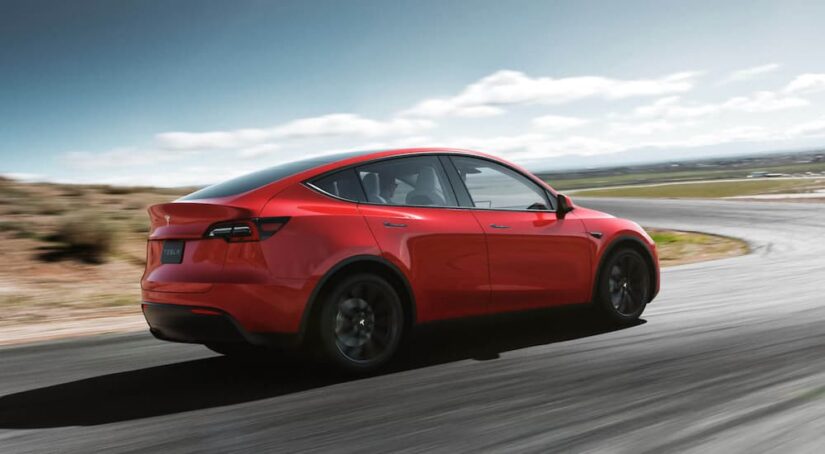
It is impossible to discuss in-car entertainment without starting with the brand that pioneered the software-defined vehicle. Tesla has maintained a significant lead in this category for years, primarily because it views its infotainment system as a gaming console first and a car interface second. For buyers looking at the Model 3, Model Y, Model S, or Model X, the Tesla Theater and Tesla Arcade are standard features that set the bar for the industry.
The integration of streaming services in a Tesla offers native support for Netflix, YouTube, Hulu, Disney+, and Twitch, all available directly from the main menu. The user experience is incredibly responsive, thanks to the powerful AMD Ryzen processors now equipped in newer models. Unlike some competitors that suffer from laggy interfaces or slow buffering, the Tesla system loads content instantly.
Where Tesla truly creates a gap with the competition is in its gaming capabilities. The Tesla Arcade isn’t just a collection of simple games. It supports complex titles that require genuine graphical and processing power. Owners can play games like Cuphead, Stardew Valley, and Beach Buggy Racing 2 using the car’s steering wheel and pedals or by connecting Bluetooth controllers. In the refreshed Model S and Model X, the rear screen allows passengers to game or stream independently, so entertainment isn’t limited to the seats up front.
BMW: The Ultimate Rear-Seat Cinema
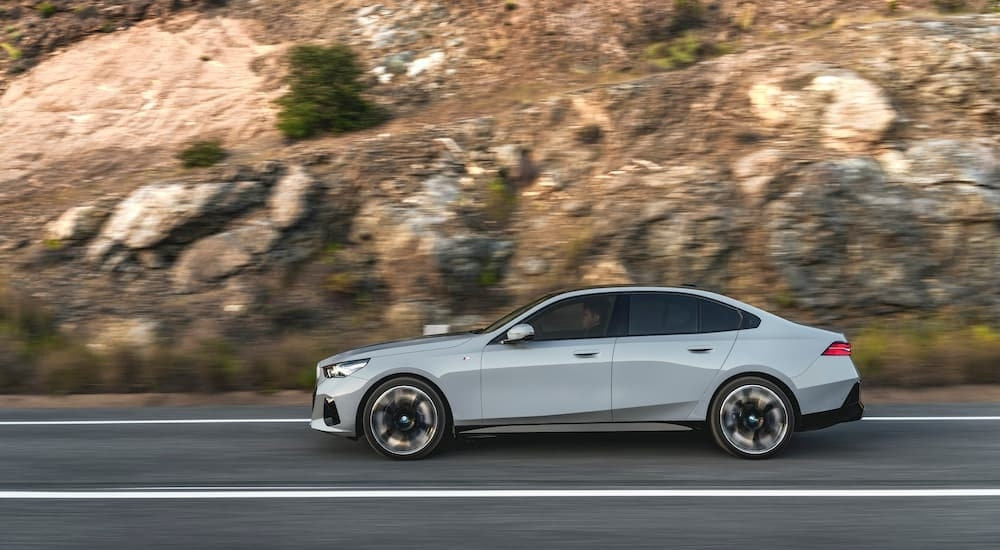
While Tesla mostly focuses on the front-row experience, BMW has put a lot more attention on the back seat with the i7 and the upcoming i5. If you are shopping for a luxury electric sedan and plan to transport family or VIPs, the BMW i7 offers an option no rival currently offers: the BMW Theater Screen. This is a massive 31-inch, 8K ultra-wide display that folds down from the ceiling, virtually spanning the width of the cabin.
This screen transforms the rear of the car into a private movie theater, complete with built-in Amazon Fire TV connectivity. Passengers can stream content in 4K UHD, watch downloaded movies, or even stream music videos while the Bowers & Wilkins Diamond Surround Sound System shakes the seats with 4D audio. It is a showstopping feature that turns a charging stop into a premium cinema experience. The system also includes HDMI inputs, meaning you can even plug in a gaming console if you really want to maximize your charging downtime.
For the driver and front passenger, BMW has partnered with AirConsole to bring casual gaming to the curved dashboard display. This system is ingenious because it solves the controller problem by using your smartphone as the gamepad. You simply scan a QR code on the dashboard screen, and your phone instantly connects as a controller for games like Mario Kart-style racing games or trivia challenges. It is a social, multiplayer-focused approach that is perfect for families waiting at a charging station, allowing everyone in the car to join the game without extra hardware.
Mercedes-Benz: The Hyperscreen Ecosystem
Mercedes-Benz has taken a “more is more” approach with its high-end EQ models, specifically the EQS sedan and SUV, as well as the EQE. The centerpiece of their strategy is the MBUX Hyperscreen, a solid piece of curved glass that stretches from pillar to pillar and houses three separate displays. For buyers who want their car to feel like a spaceship, this is the interior to beat.
The entertainment offering in Mercedes-Benz vehicles has evolved rapidly with the introduction of third-party app integration. The MBUX Entertainment Plus Package supports native streaming on apps like Disney+, YouTube, Spotify, and more. Furthermore, the inclusion of the Vivaldi browser allows users to access almost any streaming site without a native app, providing a workaround for services like HBO Max or specific sports streams.
One specific feature that Mercedes-Benz offers, which is rare in the segment, is the dedicated passenger display. This screen allows the front passenger to watch movies or stream content even while the car is in motion. The system uses intelligent camera-based blocking technology to dim the screen when the driver looks at it. If you often travel with a partner who gets bored on long drives, this feature alone might sway your purchasing decision.
Volvo and Polestar: The Google Built-In Advantage
Both the Polestar 2 (and the upcoming 3 and 4) and Volvo’s electric lineup (like the EX90 and XC40 Recharge) run on Android Automotive OS. This is not to be confused with Android Auto, which runs off your phone. This is Google built directly into the car’s hardware.
The primary advantage here is the native app ecosystem available on the Google Play Store. You can download YouTube and Amazon Prime Video directly to the car. Because it is a Google system, the voice control for finding content is superior to almost any other legacy automaker. During charging, the vertical orientation of the screens in cars like the Polestar 2 provides a good viewing angle for scrolling through playlists or reading news in the Vivaldi browser.
Polestar, in particular, has leaned into the “charging lounge” concept by partnering with streaming platforms to ensure their apps are optimized for the car’s screen. While they may not offer the raw gaming power of a Tesla or the theater screen of a BMW, the interface is arguably the most intuitive and user-friendly. For buyers who are already deep in the Google ecosystem, the seamlessness of signing in and having your history and preferences ready to go is very convenient.
Hyundai and Kia: The High-Value Contenders
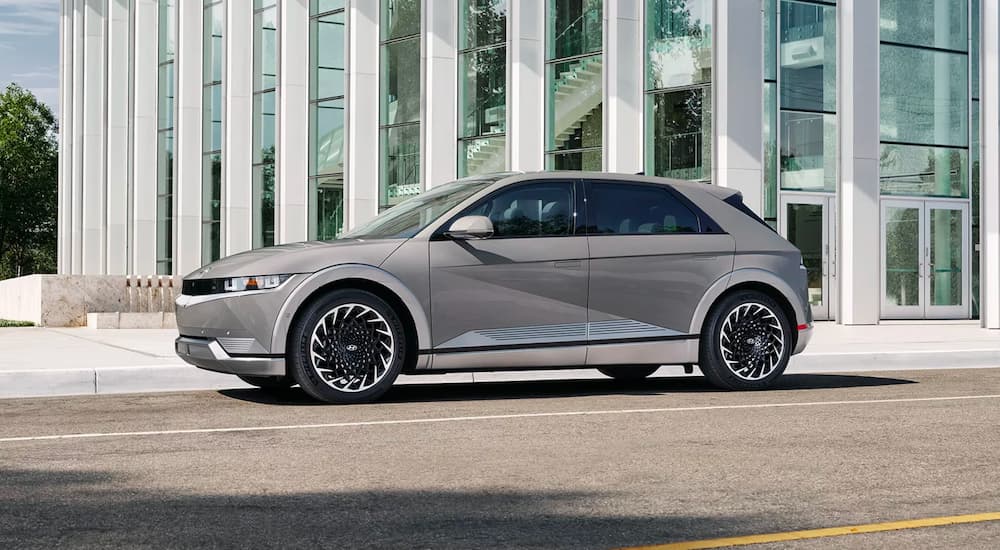
For a long time, the affordable EV segment lagged luxury cars in terms of entertainment features, but Hyundai and Kia have been working to close that gap. The Hyundai IONIQ 5, IONIQ 6, and the Kia EV6 and EV9 have been widely praised for their charging speed and driving dynamics, but their infotainment systems are getting a massive boost.
The new update allows owners to access streaming services like YouTube directly on the dual 12.3-inch panoramic screens. This is a game-changer for these models, which previously relied heavily on phone projection for entertainment. The wide aspect ratio of the screens in the IONIQ 5 and EV6 is perfect for cinematic content, and the “relaxation” seat mode in these cars, which reclines the driver’s seat fully with a leg rest, creates the perfect napping or movie-watching position while charging.
Furthermore, the three-row Kia EV9 is designed for multiple device use. While it doesn’t have a built-in rear theater screen like the BMW, it offers an abundance of USB-C ports and a V2L (Vehicle-to-Load) outlet. This standard household outlet allows you to plug in a laptop, a projector, or a home gaming console in the back seat. For buyers who want flexibility rather than a locked-down proprietary system, the ability to power your own devices is a massive advantage.
Data Plans and Connectivity Costs
One hidden factor that every prospective buyer needs to investigate before signing the paperwork is the cost of connectivity. All these amazing streaming and gaming features rely on a robust data connection, and automakers handle this differently. Tesla, for example, requires a Premium Connectivity subscription (currently around $10 per month) to access streaming over cellular data. Otherwise, you are stuck using Wi-Fi.
BMW and Mercedes-Benz often bundle data for a limited time, but eventually, you will need to pay for a data plan or add the car to your existing mobile carrier plan via an eSIM. Some systems allow you to use your phone’s hotspot to power the car’s apps, but this can quickly drain your phone’s battery and monthly data. It is important to ask the sales representative specifically about the trial period for connected services.
You should also check the reception capabilities of the car’s modem. Some vehicles are equipped with 5G connectivity, which allows 4K streaming to start instantly and prevents lag in games. Older or lower-spec EVs might still be relying on 4G LTE, which is generally fine but may struggle in congested areas or with high-bandwidth cloud gaming.
Future-Proofing Your Purchase
As you narrow down your list of potential electric vehicles, remember that software is now a rapidly depreciating asset compared to hardware. A car that supports Over-the-Air (OTA) updates is important because it means your entertainment system can improve over time. Tesla, Rivian, and Polestar have proven track records of adding entirely new apps and features to cars that have been on the road for years.
When you sit in a demo car, take five minutes to ignore the driving specs and just play with the screen. Try loading a video, finding a game, or connecting your accounts. If the system feels sluggish or confusing on the dealer lot, it will be infuriating when you are stuck at a charger on a rainy Tuesday night. The best EV for you is one that fits your driving needs and makes the necessary pauses in your journey something you actually look forward to.