
Until recently, many hybrid and all-electric vehicles have posed a real dilemma for drivers. Sure, they’re more efficient than your average gas-powered vehicle thanks to their electrically-assisted powertrains, but they often carry a much higher starting price that renders their cost-saving potential a bit moot.
Any new technology is bound to come at a premium, but that’s all changing as hybrid and all-electric vehicles continue to work their way into the mainstream. Prices haven’t necessarily fallen across the board. The average transaction price for an EV actually rose by around 0.8% between late 2023 and 2025. However, drivers are definitely getting more for their money with electrified vehicles.
As a new crop of hybrid and EV models hit your local dealership for the 2027 model year, we thought it would be the perfect time to check in on the affordable end of these sustainable segments. From a new hybrid version of Nissan’s popular Rogue crossover to a Kia Seltos that’s been through a growth spurt and the turn of the market’s most affordable EV in the Chevy Bolt, join us as we explore what’s new in the realm of economical EVs and hybrids.
Battery Breakthroughs Bring Lower Prices
The arrival of new, affordable EV and hybrids can largely be credited to the cratering cost of electrification. While large lithium-ion battery packs that power today’s hybrid and EV models have traditionally been the vehicles’ most expensive component, increased competition, improved manufacturing capabilities, and cheaper chemical formulations have led to an 89% reduction in average per-kilowatt cost over the last 15 years.
Battery packs that once cost as much as $1,000/kWh are now below the all-important $100/kWh mark, which makes a big difference in price and practicality. Today’s all-electric and hybrid models might not be cheaper than their predecessors, but they’re a much better value in terms of range, power, and available equipment.
The Nissan LEAF serves as one convincing case study. The compact EV retailed for just over $29,000 back in 2015 and offered just 84 miles of all-electric driving with its 24 kWh battery pack. A decade later, the LEAF can now cruise for up to 303 miles on a single charge thanks to its new 75-kWh battery. One might expect this nearly quadrupled range to come with a major price increase, but the most recent LEAF is less than $1,000 more expensive than the 2015 version.
The story is largely the same on the hybrid side, with most models improving both their range and performance. The Toyota Prius was the breakthrough hybrid in the U.S. market, and it continues to improve with age. While the Prius has added $4,000 to its MSRP since 2015, it’s also become 45% more powerful and gained around seven MPG in average fuel economy.
The Toyota RAV4 has been a standout in the hybrid segment, and now represents the country’s bestselling electrified SUV. It’s easy to understand the crossover’s appeal, especially when you see how far it has come in terms of performance. In just 10 years, the RAV4 hybrid has added 42 hp and 11 MPG, while doubling its maximum towing capacity from 1,750 lbs to 3,500 lbs.
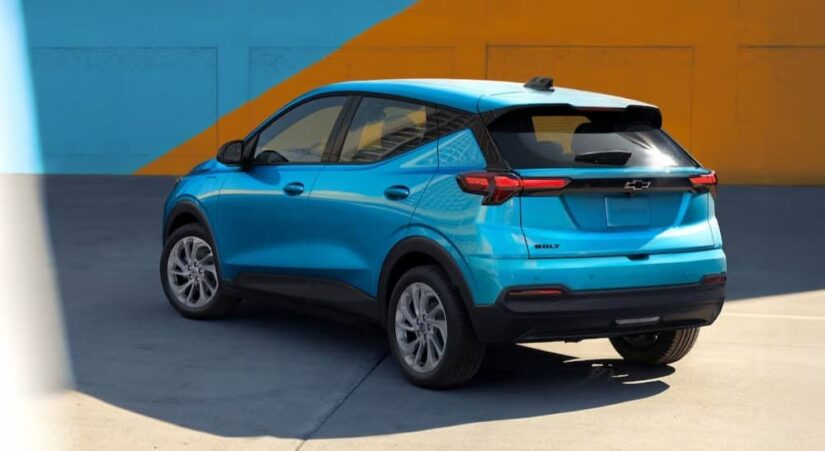
Chevy Bolt
Price: $27,600
Range: 262 miles
Horsepower: 210
The return of the Chevy Bolt is the biggest story in the realm of affordable EVs as we move into the 2027 model year. The subcompact, which was originally offered as both a hatchback and an SUV, was among the market’s most affordable all-electric options until it left the lineup in 2023. The Bolt took a not-so-brief hiatus as GM reconsidered its EV plans, phased out older battery technology, and retooled its plants to make way for the new Ultium platform and battery. Now it’s back, and better than ever.
The SUV’s powertrain won’t blow buyers away with sheer performance, but the Bolt’s low starting price gives it an advantage over the rest of the EV segment. While the Nissan LEAF has been holding down the title of “America’s most affordable EV” for the last few years, the 2027 Bolt will undercut its rival’s MSRP by more than $2,000.
What can drivers expect from this budget-friendly EV? An electric motor lifted from the Equinox EV will give owners 210 hp to play with. While the Bolt isn’t bound to set any land speed records, it does outpace the LEAF with a zero-to-60-mph time of 6.7 seconds. The crossover is limited to FWD, but it makes some interesting upgrades in the charging and range department.
The Bolt’s regenerative braking system helps to keep the juice flowing as you cruise around town, but it’s the addition of a new NACS charging port that really caught our attention. The port allows Bolt owners to use one of Tesla’s DC fast-charging Supercharger stations, where they can bring the battery from 10 to 80% in less than 30 min. Chevy says the SUV can travel up to 262 miles on a single charge, which, while impressive for the price, is only a modest improvement over the 2023 model.
What has improved is the interior with the new Bolt featuring an expanded slate of comfort, convenience, and infotainment technology. A larger 11.3-inch touchscreen infotainment system is the obvious highlight, but the Bolt also features Google built-in technology and includes GM’s acclaimed Super Cruise hands-free driving system as an available option.
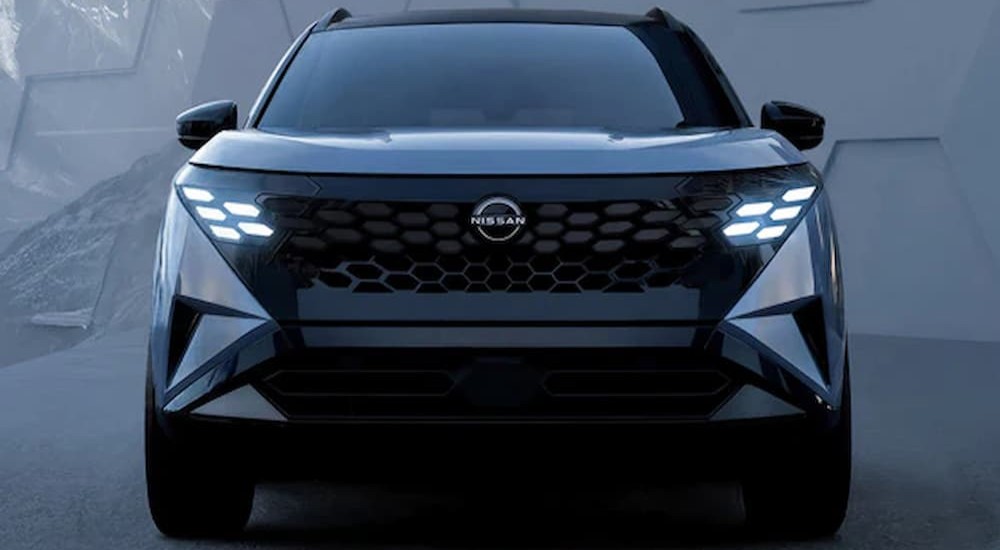
Nissan Rogue E-Power Hybrid
Price: Around $40,000
Range: TBD
Horsepower: Around 200
Nissan just introduced the plug-in hybrid (PHEV) version of its bestselling Rogue crossover in late 2025, but is already replacing it with another hybrid offering, the Rogue E-Power Hybrid. While the short-lived PHEV model was always intended as something of a stopgap, with Nissan simply rebadging the Mitsubishi Outlander for the North American market, the new E-Power Hybrid employs a series-hybrid drivetrain that’s promising from a performance and range perspective.
In a traditional hybrid, the gas engine and electric motors work in tandem to provide propulsion, blending both power sources based on the current driving conditions and driver inputs. A series hybrid like the new Rogue takes an entirely different approach, with the gas engine serving solely as a generator to recharge the SUV’s hybrid battery.
This approach results in a hybrid that drives more like an EV, which means that drivers can enjoy a quiet ride and linear power delivery of an EV without having to adhere to a strict charging schedule. It’s a compelling combination, and one that could well become the norm in the hybrid segment.
Details are still a little tough to come by, with the Rogue E-Power Hybrid not set to hit dealerships until late 2026. Some early reports, such as from Car and Driver, indicate that the SUV will be powered by a 1.5L gas engine paired with two electric motors, an inverter, and a lithium-ion battery. The Rogue is expected to produce around 200 hp and will also feature standard AWD.
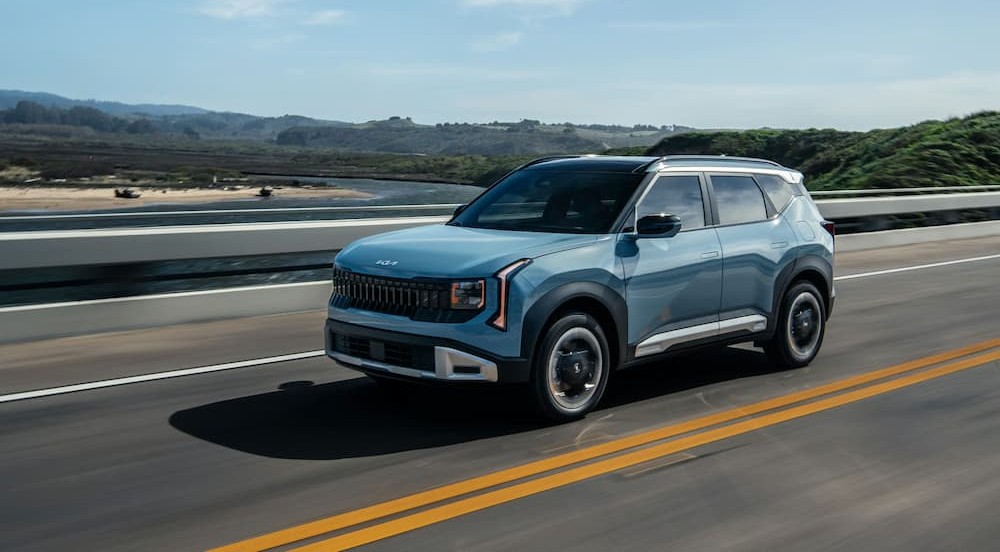
Kia Seltos Hybrid
Price: $28,500 (est)
Range: TBD
Horsepower: 155 hp (FWD), 179 hp (AWD)
The Seltos has long been Kia’s smallest crossover, but it’s growing up so fast. The new second-generation model leaves its subcompact roots behind, evolving into a compact crossover for the new year. By adding 2.4 inches to the wheelbase, Kia has expanded the Seltos’ cargo capacity while giving the SUV some of the best second-row legroom in its class.
That said, it’s a new hybrid powertrain that really has both budget- and eco-conscious drivers talking. The standard Seltos is powered by a 2.0L I-4, but the new version swaps that out for a 1.6L I-4 design that’s been paired with a hybrid powertrain. The entry-level model uses two electric motors to produce 155 hp, but an available AWD powertrain adds a rear-axle motor, bringing output to 179 hp.
Kia has one other trick up its sleeve when it comes to improving the performance and efficiency of the new hybrid Seltos. Rather than relying on the continuously variable transmission (CVT) or optional eight-speed automatic that doles out power in the gas-powered model, the Seltos Hybrid is built with a six-speed dual-clutch automatic (DCT) that combines the best aspects of automatic and manual approaches.
The DCT acts like a conventional automatic in most cases, but can also be coaxed into a higher or lower gear thanks to a set of steering wheel-mounted paddle shifters. This provides the Seltos with a more engaging, responsive ride by allowing drivers to quickly change gears without a major interruption in power.
This is certain to prove useful when merging onto the highway or performing a passing maneuver, and is the perfect pairing for the crossover’s hybrid powertrain. The electric motor jumps into action during gear changes, providing a little extra power to ensure smooth acceleration and shifting while also delivering a little extra torque. The result is a dynamic, efficient ride that represents a major improvement over the often-underwhelming CVT.
Enjoy More For Your Money
These new hybrid and EV models are here to prove that efficiency and exclusivity are no longer mutually exclusive. While drivers were once forced to pay a high price to enjoy a little electrification, a fresh wave of affordable vehicles enables every buyer to enjoy a greener experience, regardless of their budget.
The Bolt is the clear highlight, boasting a low starting price that’s bound to broaden the EV’s appeal amongst thrifty drivers. The Seltos is only slightly more expensive, and while it can’t quite match the Chevy’s performance credentials, its larger interior is sure to make it a more practical option for those seeking an efficient family vehicle.
The new Rogue E-Power Hybrid is a little more expensive than the average entry-level hybrid, but the SUV’s innovative series hybrid drivetrain marks an enticing alternative to the traditional approach. Smooth power delivery and standard AWD give the Rogue a distinct advantage over much of the segment, and it’s not hard to picture the hybrid matching the bestselling status of its gas-powered predecessor.
While we’ve covered a few of the most affordable models as we move into the 2027 model year, buyers can save even more by taking advantage of state and local tax credits and rebate programs. While the $7,500 federal EV tax credit program ended in late 2025, many states still offer similar cost-saving credits that can keep anywhere between $1,750 to $7,000 in your pocket. It’s an exciting time to consider a hybrid or all-electric vehicle, and prices should only continue to improve as the technology takes hold.